Tags: Original Research
David Scheinker, Stanford Medicine, Maya Shah, University of Vermont, Anton Backer, Grouper Education, and Kevin Schulman, Stanford Medicine and Stanford Graduate School of Business
Support: The Stanford Department of Medicine and the Division of Hospital Medicine
Timeline: Submitted October 16, 2026; accepted after review October 20, 2026.
Cite as: David Scheinker, Maya Shah, Anton Backer, Kevin Schulman. 2026. The Healthcare Policies of the November 2026 Candidates. Health Management, Policy and Innovation (HMPI.org). Volume 11, Issue 3.
Abstract
Background: Most American adults report healthcare as their top affordability concern and support a fundamental redesign or major changes to our healthcare system.
Objective: To analyze and make publicly available the healthcare issues and policy proposals of the candidates in the House, Senate, and gubernatorial races in November 2026.
Methods: For each November 2026 race we identified the top two candidates by probability of victory on Polymarket. From each candidate’s official campaign website we coded which healthcare issues were explicitly mentioned and, for those mentioned, the candidate’s position (expand, protect, reform, oppose/repeal, or no position), as well as any specific proposals. All sites were initially coded using AI and a sample of 360 coded responses was manually reviewed; we then revised the codebook and recoded all sites with two AI models, each of which audited the other’s coding, followed by a second manual review. Mistakes and changes were logged along with a quote from the website to support the finding. We compared results by issue, party, office, state, and by race competitiveness as rated by the Cook Political Report.
Results: We identified 972 readable campaign websites: 100% of Senate slots (70 of 70), 99% of gubernatorial slots (71 of 72), and 96% of House slots (831 of 870). We coded 58 issues: 10 main issues, 27 other predefined issues, and 21 issues that did not fit into these categories and were added by coders. Among the 965 Democratic and Republican sites, reproductive health and abortion access was mentioned on 53% of sites, followed by Medicare on 44%, mental health on 41%, and prescription drug pricing on 40%. Only half of sites (51% overall, 73% Democratic, and 28% Republican) mentioned any of the six issues that explicitly concern affordability: drug pricing, insurance premiums, hospital prices and price transparency, surprise billing, medical debt and health care costs in general.
The median number of issues mentioned on Democratic and Republican candidate sites was, respectively, 8 and 2 overall, 8 and 2 in House races, 10 and 2 in Senate races, and 10 and 3 in gubernatorial races. In competitive races, Republican candidates mention mental health, drug pricing, Medicare, and food and nutrition more often and reproductive health and abortion access less often, while Democratic candidates mention cost and access issues more often and universal coverage less often. The data and interactive tools are freely available online.
Discussion: A systematic analysis of the healthcare policy positions stated on 972 campaign websites for the November 2026 election reveals significant differences in the frequency with which healthcare is mentioned between political parties, in more competitive races, and between issues that do and do not explicitly address affordability.
Introduction
Recent polls show that healthcare costs are a top affordability concern for American adults and that a large majority of adults, 90% of Democrats and 75% of Republicans, support a fundamental redesign or major changes to our healthcare system.1
Across states, political parties, and different types of office, politicians and constituents hold different views on healthcare policies and support different proposals. Various stakeholders such as patients, physicians, nurses, veterans, employers, and industry groups could potentially benefit from access to data on how their representatives’ views align with their own. There is no systematic, openly available database and analysis of these views.
We sought to create the first systematic, openly available database and analysis of the healthcare policies and proposals of the leading candidates in the November 2026 elections and beyond.
Methods
Data
We considered up to two candidates for every November 2026 election for the U.S. House (435 seats), U.S. Senate (35 seats) and governor (36 seats), a total of 1,012 candidate slots (870 House, 70 Senate, 72 governor). For each race we identified the two candidates with the highest probability of victory on Polymarket as of Monday, October 12, 2026. Races where the nominee has not yet been determined (Louisiana’s November 3 all-party primaries for House races) were marked as placeholders. Campaign website URLs were identified from FEC filings, Ballotpedia, and a Google search for the candidate’s name, office, and the term “official campaign site.” Only campaign sites were used. Documents hosted or linked by the campaign as part of its platform were included; news coverage, official government pages and social media were not.
Issues
In a preliminary analysis, Claude was used to identify and code every healthcare issue explicitly mentioned on every website. Based on a review of the initial coding data, we conducted a secondary analysis in which Claude examined the 100 sites that listed the most healthcare issues and a random sample of 100 sites. From this we predefined 37 issues with a standard coding approach: 10 main issues (reproductive health and abortion access, Medicare, mental health, drug pricing, veterans’ health, substance use, Medicaid, the Affordable Care Act, food and nutrition, and universal coverage), coded for every site, and 27 other predefined issues, recorded when a site named them (Supplement 1). Coders added a new label when a site named a health topic that fit none of the 37 pre-defined issues; this produced 167 free-text labels, which were consolidated into 21 additional issues, for a total of 58 (Supplement 1).
For each candidate and issue, coders recorded whether the issue was explicitly mentioned (yes, no, unclear) and, if mentioned, the candidate’s position: expand or support; protect the existing program or oppose cuts; reform how it works; oppose, restrict or repeal; or mentioned without a position. For example, Medicare for All and Medicare expansion were coded as “Medicare” under the policy proposal to “expand” and non-Medicare single-payer and universal healthcare coverage proposals were coded as “Universal Coverage.” Explicit opposition to Medicare for All, single-payer, “government-run,” or “socialized” medicine was coded as opposing Medicare expansion or opposing Universal Coverage, depending on context (Code definitions in Supplement 1). Coders recorded a quote of at most 15 words and the page URL for every mention, and one row for each additional health topic the site named.
Coding
In the primary analysis, after the issues and codes had been determined, coders (Claude and ChatGPT) read each site’s home page and every issues, priorities, or platform page and sub-page. Claude Sonnet 5.5 coded all Senate and gubernatorial sites and 610 House sites; ChatGPT Sol 6.1 coded 231 House sites. Sites that blocked automated access were read through a browser.
Verification
After the preliminary analysis of all sites by Claude Sonnet 5.5, 360 coded responses were manually reviewed against the sites.
After the primary analysis, each model audited the other. Claude re-read all 231 ChatGPT-coded sites and agreed with 93.1% of 2,640 coded rows; the 183 disagreements, mainly mentions missed because only the home page had been read, were corrected with a logged quotation. ChatGPT re-read 419 Claude-coded House sites and proposed coding changes to 65 of 5,206 rows (1.2%), of which 57 were accepted after checking the saved page text. All change logs are available online.
After the model-based auditing, 186 coded responses for 16 House candidates were manually reviewed against the sites.
Analysis
We report the share of candidates mentioning each issue overall and by party, office and state, the distribution of positions among candidates who mention an issue, and the number of issues per candidate. Analyses were conducted with R and Python.
Results
Coverage
We identified 972 readable campaign websites: 70 of 70 Senate slots (31 D, 35 R, 4 I), 71 of 72 gubernatorial slots (35 D, 35 R, 1 I; the Wyoming Republican has no website), and 831 of 870 House slots (426 D, 403 R, 2 I). The 39 House slots without a coded site were 19 with no identified nominee (including Louisiana’s 5th and 6th districts, described below), 10 Republican candidates for whom no campaign website was found, and 10 slots in 5 districts not yet included in the data.
Two Louisiana House districts (the 5th and 6th) have no candidates in the analysis set. After the Supreme Court’s 2026 ruling in Louisiana v. Callais, the state redrew its congressional map and moved all House races to an all-party primary on November 3, with a December 12 runoff between the top two finishers. After the general-election candidates are chosen, their policies will be added to the ongoing analysis on the website.
There were 7 independents with a readable site: 4 Senate, 1 governor, and 2 House candidates (Supplement Figure 1) and they were omitted from the subsequent analyses comparing the frequencies of the issues and positions mentioned by Democrats and Republicans. Unless stated otherwise, percentages are of the 965 Democratic and Republican candidates with a readable site (492 D, 473 R).
Verification
In the first manual verification of 360 coded responses, manual review flagged 43 responses; after adjudication against our coding rules, 28 (7.8%) were deemed errors, 25 of which were mentions the model had failed to find on the site and 3 of which were incorrectly coded positions. In the second manual verification, after Claude and ChatGPT had each audited the other’s work, manual review flagged 17 of 186 coded responses; after adjudication, 12 (6.5%) were deemed errors, 8 of which were associated with content that required a secondary action such as downloading a policy document or opening a drop-down menu.
Issues mentioned by office, party, and state
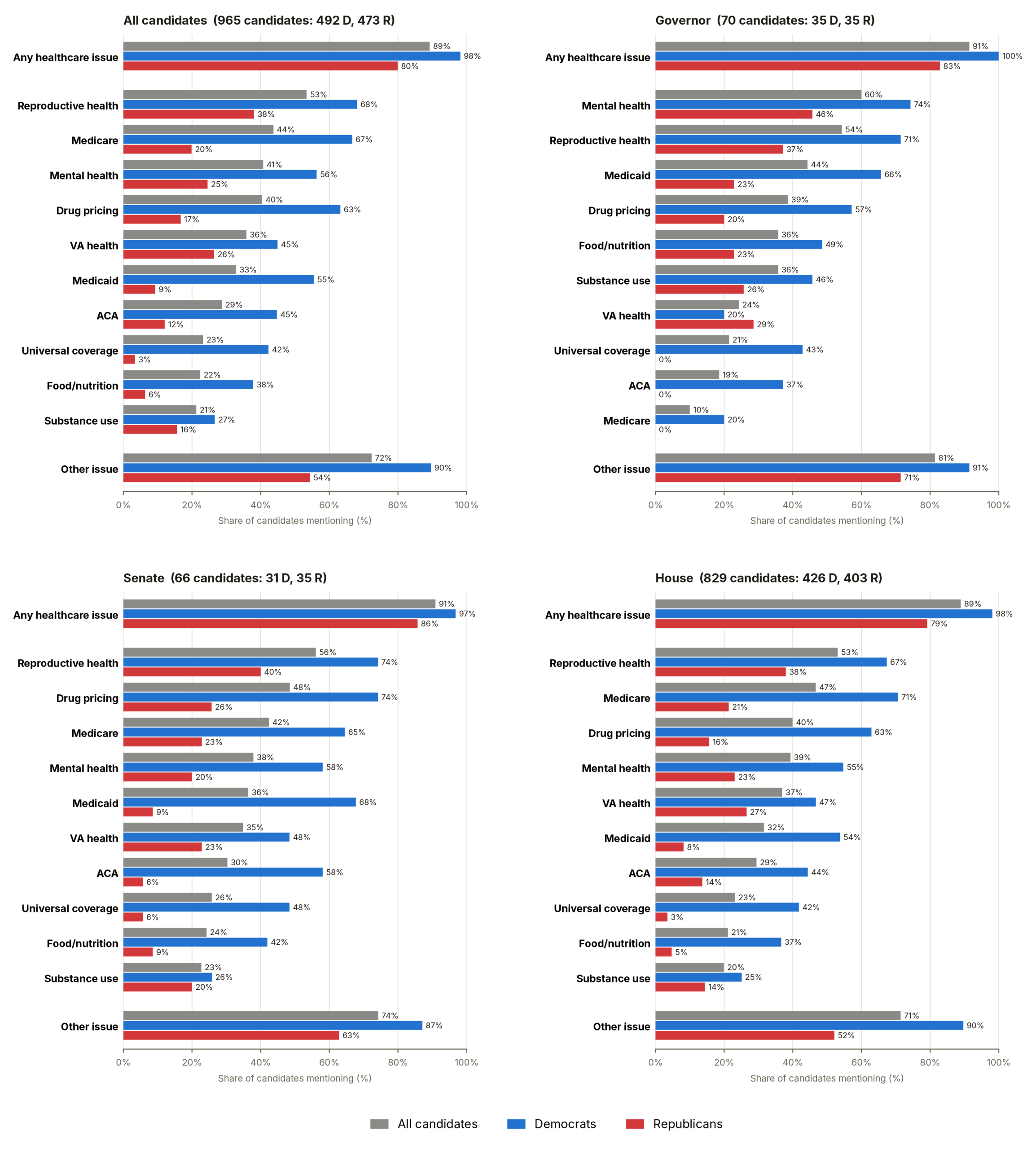
Overall, 89% of sites mentioned at least one health topic. Reproductive health and abortion access was the most common issue, mentioned on 53% of sites, followed by Medicare (44%), mental health (41%), drug pricing (40%), veterans’ health (36%), Medicaid (33%), the Affordable Care Act (ACA) (29%), universal coverage (23%), food and nutrition (22%), substance use (21%), and any other issue (72%) (Figure 1).
The relative frequency with which issues were discussed was similar across offices, with a few exceptions. Gubernatorial candidates mentioned mental health (60%), substance use (36%), and food and nutrition (36%) more often than House or Senate candidates, and mentioned Medicare (10%) and the ACA (19%) less often. No Republican gubernatorial site mentioned Medicare, the ACA, or universal coverage (Figure 1).
Figure 1
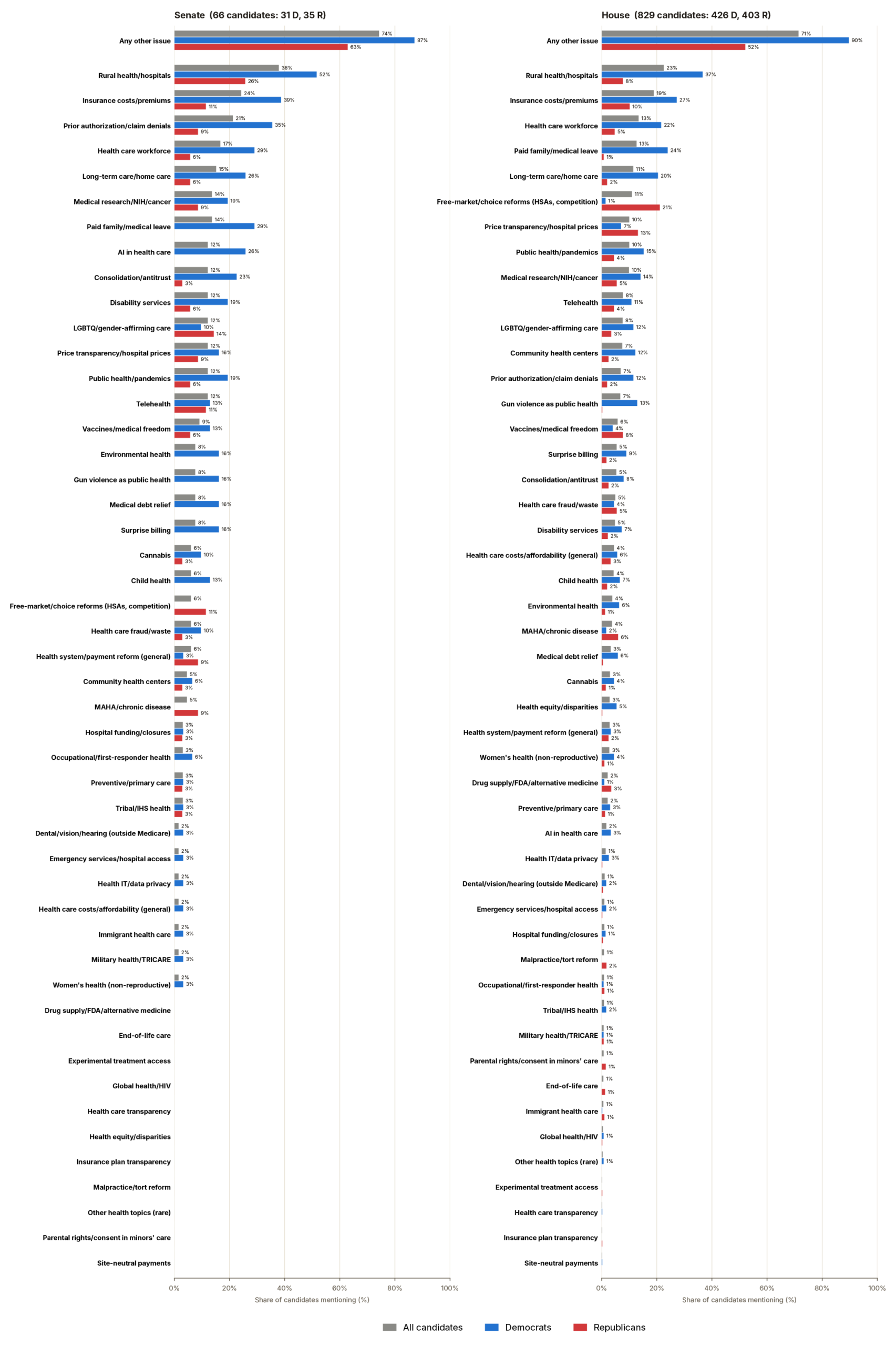
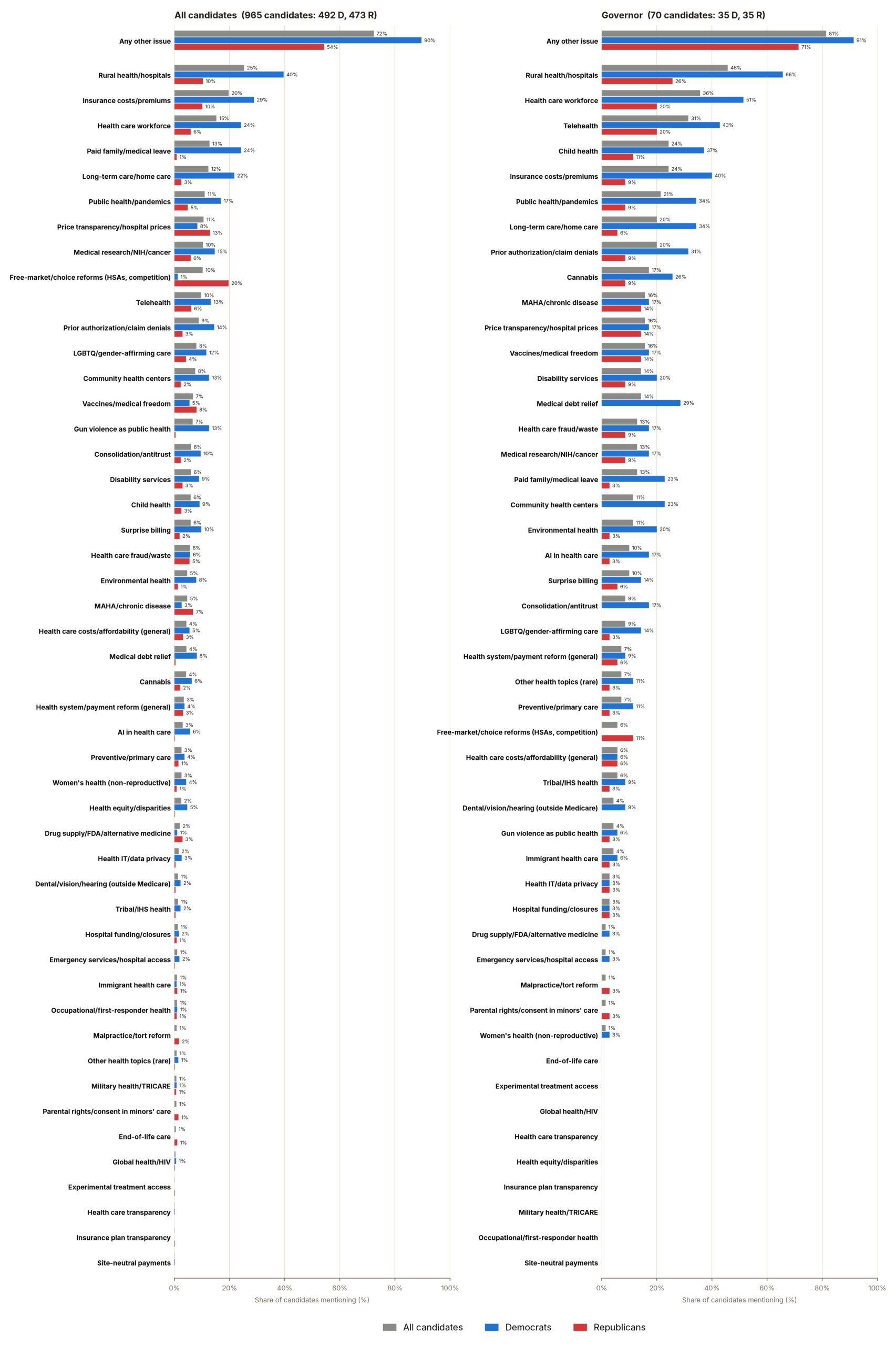
Among other healthcare issues, rural hospitals and rural access were the most common (25%), followed by insurance premiums (20%), the healthcare workforce (15%), paid family and medical leave (13%), long-term and home care (12%), public health (11%), hospital price transparency (11%), medical research (10%) and market-based reforms such as health savings accounts (10%) (Supplement Figures 2,3).
Democratic candidate sites mentioned each of the top-10 issues more often than Republican candidate sites overall and, with one exception, within governor, Senate, and House races; the one exception was veterans’ health among gubernatorial candidates, mentioned by 10 Republicans and 7 Democrats (Figure 1). Among other issues, Republican candidate sites mentioned market-based reforms (20% vs 1%) and price transparency (13% vs 8%) more often and Democratic candidate sites mentioned rural hospitals (40% vs 10%), paid leave (24% vs 1%) and long-term care (22% vs 3%) more often (Supplement Figures 2,3).
Reproductive health and abortion access was the most-mentioned issue in 33 states, Medicare in 6 (Colorado, Florida, Hawaii, Maine, New Hampshire, Pennsylvania), mental health in 5 (Alaska, California, New Jersey, New Mexico, Oregon), drug pricing in 5 (Connecticut, Massachusetts, Minnesota, Nevada, Washington) and universal coverage in 1 (Montana).
Affordability issues
Six of the coded issues explicitly concern the cost of care to patients or payers: drug pricing, insurance costs and premiums, hospital prices and price transparency, surprise billing, medical debt relief, and health care costs in general. Drug pricing was mentioned on 40% of sites, insurance premiums on 20%, price transparency on 11%, surprise billing on 6%, and medical debt relief and general affordability on 4%. Any of the six was mentioned on 51% of sites (493 of 963): 73% of Democratic and 28% of Republican sites, and 51% of House, 53% of Senate, and 50% of gubernatorial candidate sites. Excluding drug pricing, 33% of sites (43% of Democratic and 22% of Republican) mentioned any of the remaining five.
Candidate positions on issues
Among candidate sites that mentioned one of the top-10 issues, the positions taken differed across and within parties.
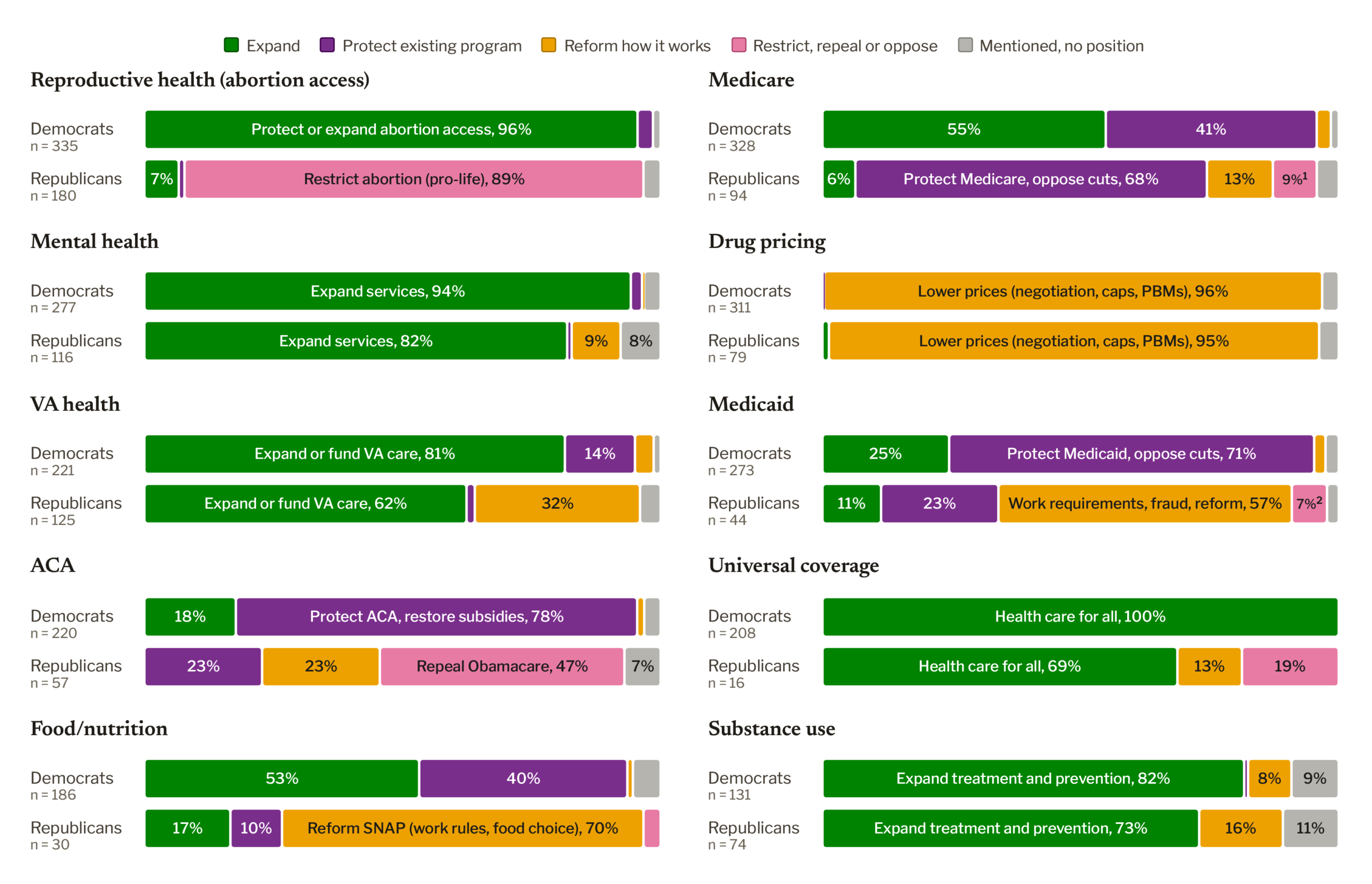
For reproductive health and abortion access, 96% of Democrats would protect or expand abortion access while 89% of Republicans would restrict abortion access. For the ACA, 78% of Democrats would protect it or restore its premium subsidies while 47% of Republicans would repeal it, 23% of Republicans would reform or replace it, and 23% would protect it. For Medicaid, 71% of Democrats would protect it from cuts and 25% expand it while 58% of Republicans proposed work requirements, fraud enforcement or other reforms and 23% would protect it.
On Medicare, 55% of Democrats proposed expansion (Medicare for All, a lower eligibility age or added benefits) and 41% protection, while 68% of Republicans proposed protecting the existing program and 9% opposed expansion. On food and nutrition, 53% of Democrats would expand and 40% protect the Supplemental Nutrition Assistance Program (SNAP), the Special Supplemental Nutrition Program for Women, Infants, and Children (WIC) and school meals while 70% of Republicans proposed reforms such as work requirements or restrictions on eligible foods (Figure 2).
For drug pricing, 96% of Democrats and 95% of Republicans proposed reforms to lower drug prices. For mental health, 94% of Democrats and 82% of Republicans would expand services. For substance use, 82% of Democrats and 73% of Republicans would expand treatment or prevention. On veterans’ health, 81% of Democrats and 62% of Republicans would expand or fund VA care, and 32% of Republicans proposed reforms such as community care choice (Figure 2).
Figure 2
Issues mentioned in competitive races
In competitive races, those rated Toss Up or Lean by the Cook Political Report in early October 2026, there were 62 Democrats and 62 Republicans with a readable site and 430 Democrats and 409 Republicans in safe races, rated Likely or Solid by the Cook Political Report. The websites of Democrats and Republicans in competitive races mentioned more of the top-10 issues, an increase from an average of 5.0 to 5.4 for Democrats and an increase from an average of 1.6 to 2.4 for Republicans.
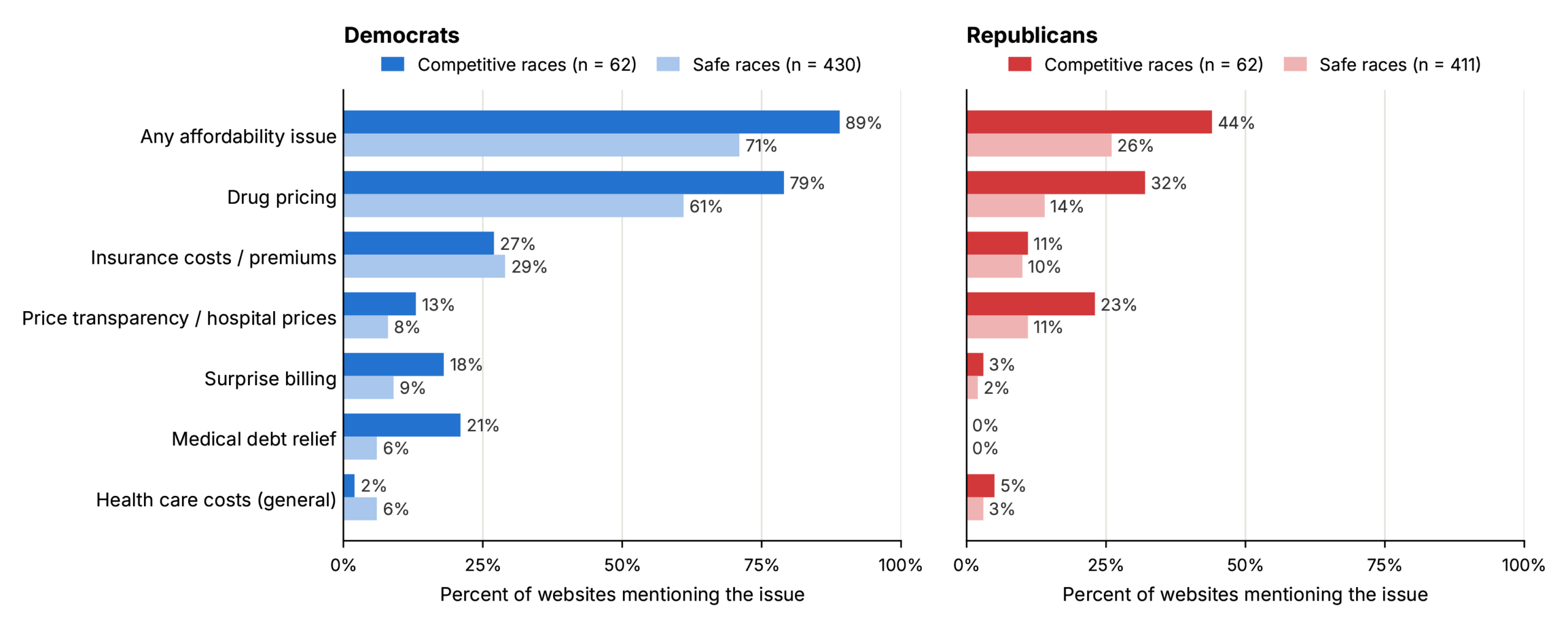
Republican candidate websites in competitive races mentioned mental health, drug pricing, Medicare, and food and nutrition more often than in safe races, and they mentioned reproductive health less often. Democratic candidate websites mentioned cost and access issues more often in competitive races and mentioned universal coverage less often (Figure 3).
Figure 3
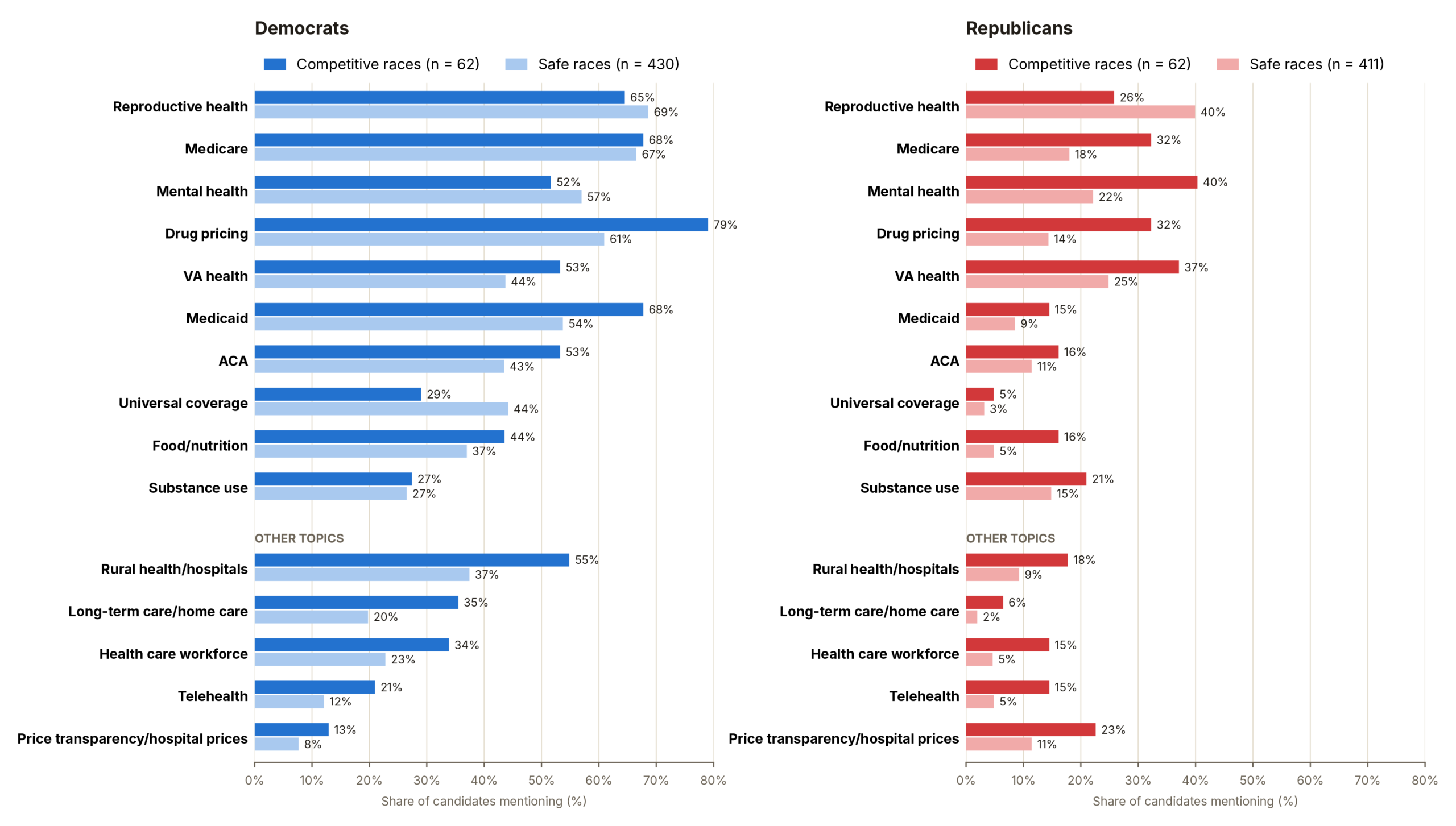
Candidates in competitive races mentioned an affordability issue more often than those in safe races: 89% versus 71% of Democrats and 44% versus 26% of Republicans (Figure 4).
Figure 4
Policy proposals
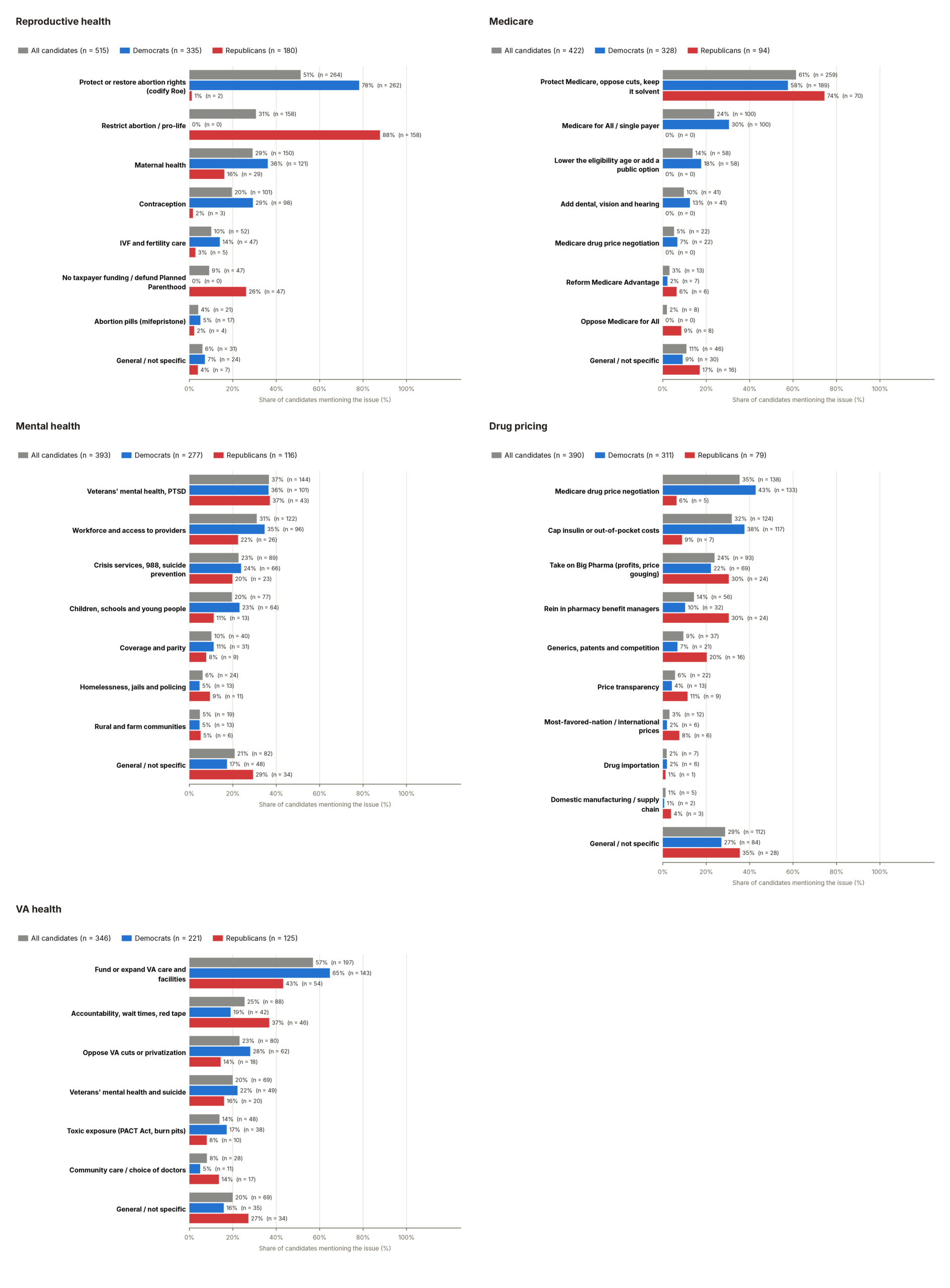
Among the 335 Democratic websites that mentioned reproductive health and abortion access, 78% proposed protecting or restoring abortion access, and among the 178 Republican websites that mentioned it, 88% proposed restricting abortion access. The most common proposal on Medicare was to protect the program, oppose cuts or keep it solvent; this was mentioned by 58% of Democratic and 75% of Republican websites. On Medicaid, 60% of Democratic candidate websites that mentioned it proposed opposing cuts, and on the ACA, 55% proposed extending premium tax credits. On drug pricing, the most common Democratic proposals were Medicare drug price negotiation (43%) and capping insulin or out-of-pocket costs (38%). The most common Republican proposals were reining in pharmacy benefit managers (31%) and taking on pharmaceutical companies (29%) (Figure 5).
Proposals on reproductive health and abortion access and the ACA differed most between parties. No Democratic website proposed restricting abortion or repealing the ACA, while 88% of Republican websites that mentioned reproductive health proposed restricting abortion and 54% of those that mentioned the ACA proposed repealing or replacing it. Protecting or restoring abortion rights was proposed by 78% of Democratic websites and 1% of Republican websites. Extending premium tax credits was mentioned by 55% of Democratic and 7% of Republican websites. On Medicaid, 60% of Democratic and 16% of Republican websites opposed cuts, while 49% of Republican and 2% of Democratic websites proposed fighting fraud, waste or ineligible enrollment. Medicare for All or a single-payer system was proposed by 30% of Democratic and 0% of Republican websites while 9% of Republican websites opposed it. On drug pricing, Medicare drug price negotiation was proposed by 43% of Democratic and 6% of Republican websites (Figure 5).
Figure 5
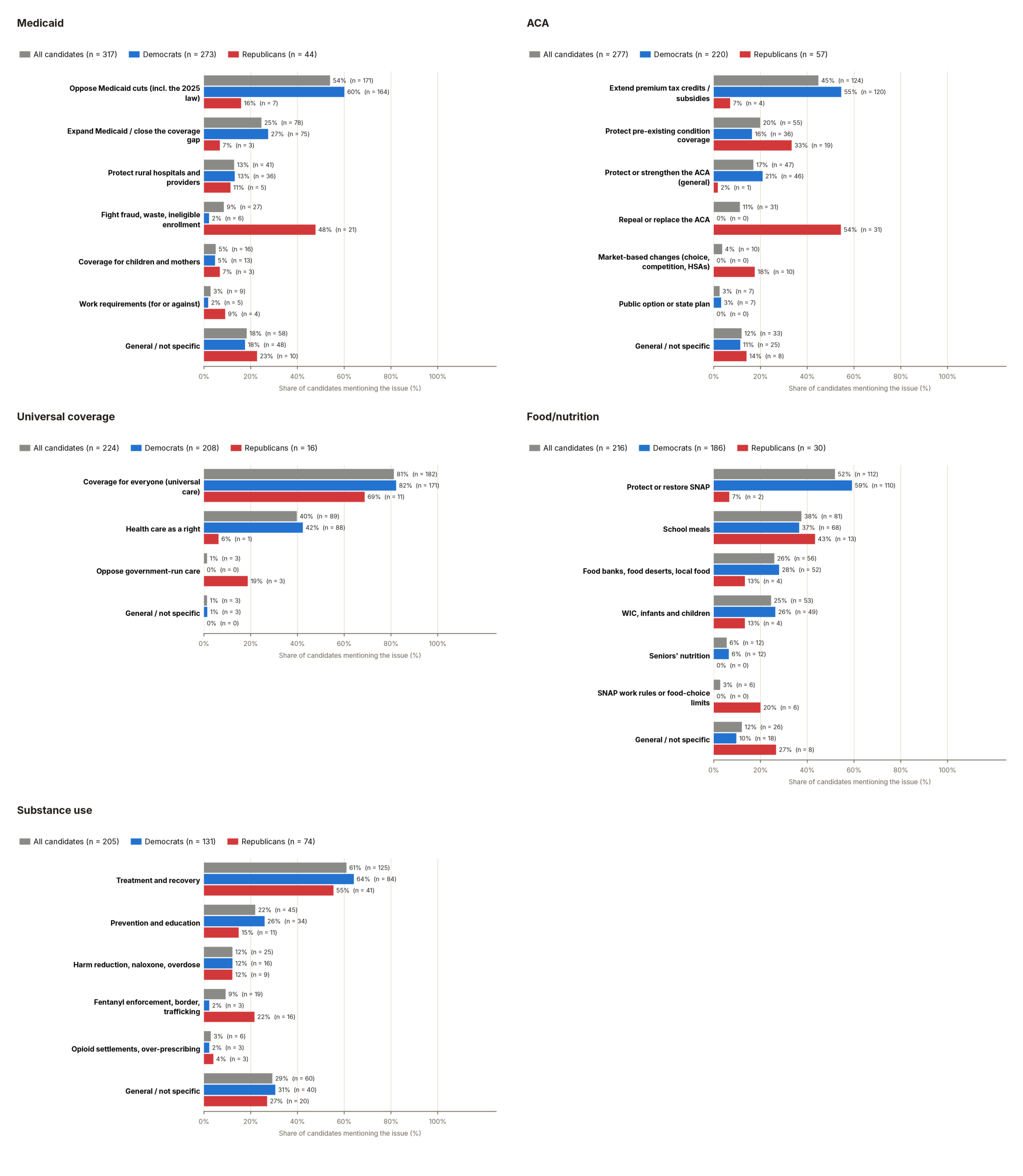
Proposals on substance use and mental health were the most similar between parties. On substance use, treatment and recovery was the most common proposal, made by 64% of Democratic and 56% of Republican websites that mentioned the issue. The largest difference was fentanyl enforcement, border security, or trafficking, which was proposed by 22% of Republican and 2% of Democratic websites. On mental health, veterans’ mental health and PTSD was proposed by 36% of Democratic and 38% of Republican websites. Crisis services, 988 and suicide prevention were proposed by 24% of Democratic and 20% of Republican websites. Rural and farm communities were mentioned as a policy by 5% of the sites for each party. For food and nutrition, 37% of Democratic and 45% of Republican websites proposed school meal programs. Of the websites that discussed universal coverage separately from Medicare for All, 82% of Democratic websites supported a universal coverage program as did 69% (11 of 16) of Republican websites (Figure 6).
Proposals on substance use and mental health were the most similar between parties. On substance use, treatment and recovery was the most common proposal, made by 64% of Democratic and 56% of Republican websites that mentioned the issue. The largest difference was fentanyl enforcement, border security, or trafficking, which was proposed by 22% of Republican and 2% of Democratic websites. On mental health, veterans’ mental health and PTSD was proposed by 36% of Democratic and 38% of Republican websites. Crisis services, 988 and suicide prevention were proposed by 24% of Democratic and 20% of Republican websites. Rural and farm communities were mentioned as a policy by 5% of the sites for each party. For food and nutrition, 37% of Democratic and 45% of Republican websites proposed school meal programs. Of the websites that discussed universal coverage separately from Medicare for All, 82% of Democratic websites supported a universal coverage program as did 69% (11 of 16) of Republican websites (Figure 6).
Figure 6
Further analyses and detailed data
The list of candidates, their campaign website URLs, the quotes based on which we coded their position on each issue, and their policy proposal are available as raw data for download and through the features of an interactive website healthcarepolicies.org, which will be maintained and updated for this and future elections.
Discussion
By analyzing the campaign websites of 972 of the top-two candidates for the House, Senate and governor in November 2026, we identified the healthcare issues most commonly discussed and how the frequency of their mention, candidate views, and candidate proposals differ across states, office, and political party.
On issues that have been litigated in prior campaigns, such as abortion access and the ACA, positions were consistent within each party and opposed between the parties.
Beyond these issues, we were able to assess how candidates responded to concerns of likely voters regarding health care affordability and concerns over the healthcare system more broadly. While a few candidates have advanced their campaigns with their own policy proposals,2 most rely on policy proposals advanced by others.
There was a strikingly narrow range of policies proposed and discussed to address public concerns about healthcare affordability and the structure of the healthcare system. Outside of drug pricing, only a minority of candidates of both parties attempted to address healthcare affordability concerns. The most frequent response to these issues was a subset of campaigns that supported either a single-payer proposal or addressed ACA subsidies.
Single-payer proposals were advanced in the 2020 presidential campaign3 and at the state level.4 However, these plans have not advanced over concerns about costs, feasibility, governance, and potential disruption to the healthcare delivery system.
Limitations
Campaign websites are one channel, and candidates with sparse websites may campaign on healthcare elsewhere. Coding was performed by large language models and only a small subset of coded findings was manually reviewed. Cross-model audits agreed on 93% of rows and nearly all spot checks of the quotes provided to justify model conclusions found the quoted text on the site. Positions were coded from text alone and as a single position per issue; candidates who, for example, oppose Medicare for All while pledging to protect Medicare were coded once.
Models may have a higher chance of missing information mentioned only in a downloadable policy document, a drop-down menu, or in another format that requires an additional dedicated action; ongoing revisions of the search approach aim to reduce such omissions. All errors identified in manual review were mentions the models had missed rather than misread positions, and they occurred on the sites of candidates of both parties; none suggest bias by issue, race, or political party. Sites change during a campaign; coding reflects the sites as read in October 2026.
Conclusion
Almost every candidate for the November 2026 elections mentions healthcare on their campaign website, but Democrats and Republicans differ in the number of issues they discuss and their policies on the issues, with a few areas of agreement including drug pricing, mental health, and substance use. There appears to be a significant need for novel policy proposals that can bridge the gap between the concerns of the electorate focused on affordability and significant reform and the limited menu of policy responses proposed by political candidates.
References
- https://www.kff.org/public-opinion/kff-health-tracking-poll-health-care-issues-in-the-lead-up-to-the-2026-midterm-election/
- El-Sayed A, Johnson M. Medicare for All: A Citizen’s Guide. Oxford University Press, 2021.
- https://elizabethwarren.com/plans/m4a-transition?source=soc-WB-ew-tw-rollout-20191115
- https://budgettrack.blob.core.windows.net/btdocs2021/611.pdf
Supplement
Supplement 1. Issues coded
Ten main issues were coded for every site, in the order below. An issue was coded as mentioned (Yes) when the site addressed the content in the second column; the third column gives content that was not counted as that issue. Definitions are reproduced from the project codebook (healthcarepolicies.org, Data page).
| # | Issue | Code Yes when the site addresses | Not this issue |
| 1 | Reproductive health | abortion (either direction), Roe/Dobbs, contraception, IVF, maternal health, Planned Parenthood | a pro-life group rating with no statement → Unclear |
| 2 | Mental health | mental health care/services, behavioral health, suicide prevention, 988, veterans’ mental health | substance use alone (→ #4) |
| 3 | Drug pricing | prescription drug prices/costs, Medicare drug negotiation, insulin caps, importation, Big Pharma pricing, pharmacy benefit managers (PBMs) | generic “lower costs” with no drug or health specifics → No |
| 4 | Substance use | opioids, fentanyl (as addiction/overdose), addiction treatment/recovery, overdose prevention, drug abuse | fentanyl only as border/law enforcement with no health framing → Unclear |
| 5 | Medicare | Medicare for All, lowering the age, adding dental/vision/hearing, a public option, protecting or strengthening Medicare, opposing Medicare cuts, Medicare Advantage | Medicare fraud only → Unclear |
| 6 | VA health | veterans’ health care, the VA health system, community care, PACT Act / toxic exposure, veterans’ mental health (also code #2) | veterans’ benefits/jobs with no health care → No |
| 7 | ACA | Affordable Care Act/Obamacare, marketplace, premium tax credits/subsidies, pre-existing conditions, repeal | |
| 8 | Food/nutrition | SNAP/food stamps, WIC, school meals, food insecurity/hunger, nutrition | MAHA or “healthy food” with no program or policy → Unclear |
| 9 | Medicaid | expansion, cuts, work requirements, the 2025 reconciliation-bill changes, protecting Medicaid (incl. state names: Medi-Cal, BadgerCare, TennCare…) | |
| 10 | Universal coverage | health care as a right, universal coverage, “health care for all”, coverage for every American, not framed as Medicare for All | if framed as Medicare for All/single-payer → code #5 instead |
Twenty-seven other issues were pre-defined and recorded, with the same position categories, whenever a site named them: Rural health/hospitals; Public health/pandemics; Health care workforce; Price transparency/hospital prices; Medical research/NIH/cancer; Insurance costs/premiums; Consolidation/antitrust; Prior authorization/claim denials; Medical debt relief; Surprise billing; AI in health care; Telehealth; Disability services; Long-term care/home care; Child health; LGBTQ/gender-affirming care; Community health centers; Health care fraud/waste; Women’s health (non-reproductive); Dental/vision/hearing (outside Medicare); Vaccines/medical freedom; MAHA/chronic disease; Free-market/choice reforms (HSAs, competition); Cannabis; Gun violence as public health; Paid family/medical leave; Tribal/IHS health.
Coders added a new label when a site named a health topic that fit none of the 37 pre-defined issues. This produced 21 additional issues: Environmental health; Health care costs/affordability (general); Health system/payment reform (general); Preventive/primary care; Health equity/disparities; Drug supply/FDA/alternative medicine; Health IT/data privacy; Hospital funding/closures; Emergency services/hospital access; Occupational/first-responder health; Immigrant health care; Malpractice/tort reform; Other health topics (rare); Military health/TRICARE; Parental rights/consent in minors’ care; End-of-life care; Global health/HIV; Experimental treatment access; Health care transparency; Insurance plan transparency; Site-neutral payments. In total, 58 issues were coded.
Coding instructions
Detailed instructions for how the coding was completed are available in the project codebook (version 2) as published on healthcarepolicies.org. They were given to every coder, model or human.
Supplement Figure 1: The seven independent candidates with a readable campaign website, the race for each, the main issues each mentions with the position taken, and the other issues each mentions
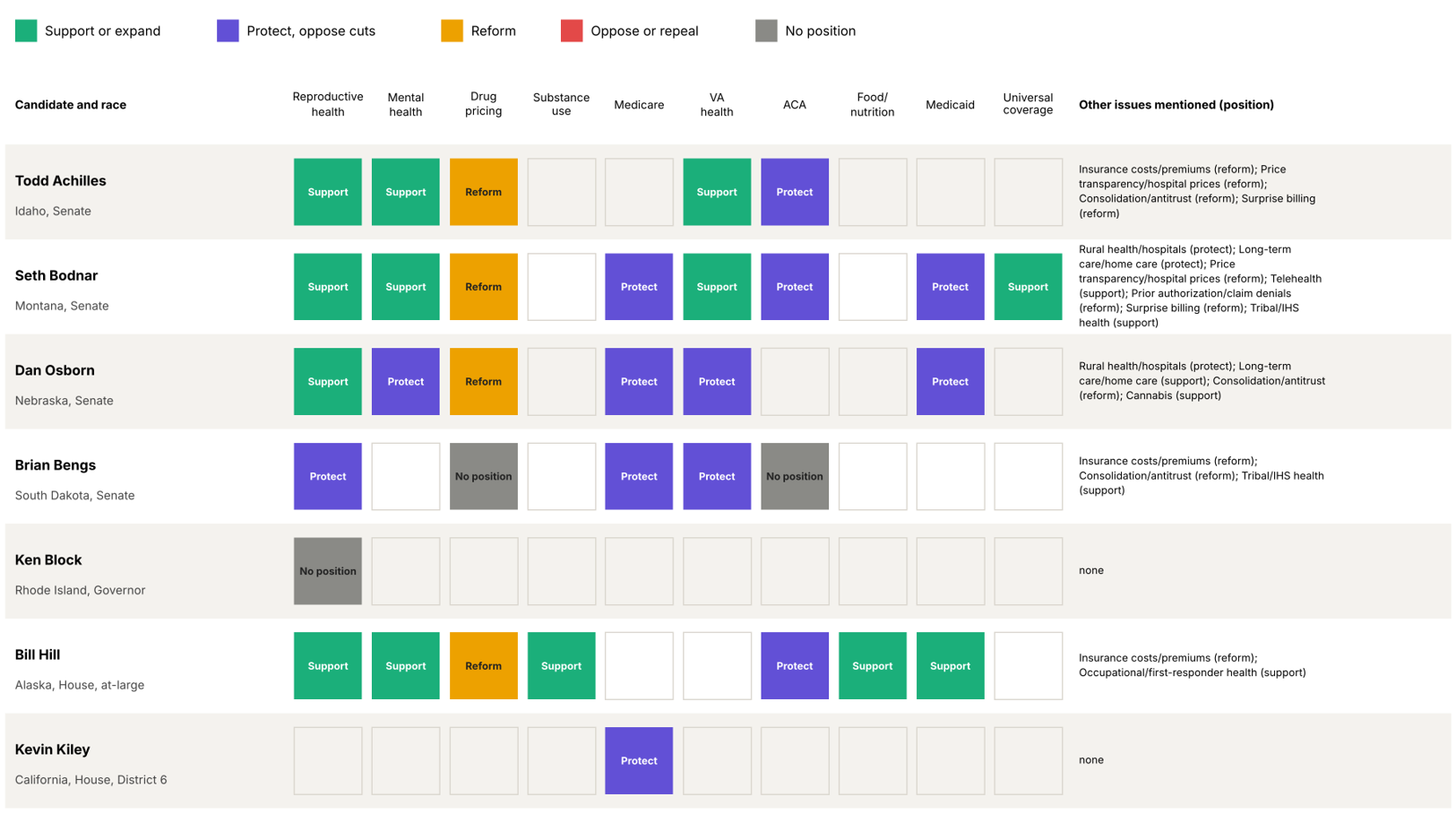 These seven candidates are excluded from all comparisons of Democrats and Republicans in the main text.
Supplement Figure 2: The percent of all, Democratic and Republican candidate websites mentioning each healthcare issue overall and in governor and Senate races
Supplement Figure 3: The percent of all, Democratic, and Republican candidate websites mentioning each healthcare issue in Senate and House races