HMPI

How COVID Changed Health Innovation in Mental Health in Low- to Middle-Income Countries: Gaza Strip in the Spotlight

Rola Shaheen, Adjunct Assistant Professor of Radiology at Queen’s University – Kingston, Ontario, and Founder of WILL (Women’s Imaging & Leadership Lab), and Yasser Abu Jamei, Director General, Gaza Community Mental Health Programme

Contact: rshaheen.health@gmail.com

Abstract

What is the message? The paper describes multiple initiatives that arose in response to the Covid-19 pandemic and are addressing mental health challenges in the Gaza Strip.

What is the evidence? The authors draw on their professional experience working in Gaza.

Timeline: Submitted: October 7, 2021; Accepted after review: November 5, 2021

Cite as: Rola Shaheen, Yasser Abu Jamei. Silver Linings; How COVID Changed Health Innovation in Mental Health in Low to Middle Income Countries: Gaza Strip in The Spotlight. Health Management, Policy and Innovation (www.hmpi.org), Volume 6, Issue 2, 2021.

TO READ THE ARABIC TRANSLATION OF THIS ARTICLE, PLEASE CLICK HERE.

COVID-19 Impact on Mental Health in Low- to Middle-Income Countries

One of the major silver linings of the COVID-19 pandemic is the undeniable recognized importance of mental health care for the global population. Unfortunately, the low- to middle-income countries (LMICs) have classically allocated a relatively small portion of global health resources to mental health.

The emerging and imposed global public health measures to control the pandemic  and to minimize related mortality have substantially impacted mental health. The stressors associated with quarantine[1], social distancing, lockdown, the distress of anxiety and fear of infection, COVID fatigue, variability in public health policies, and the pandemic’s economic effect are probably the most impactful factors on mental health. The responses addressing the resulting mental health crisis in LMICs are characterized by different sensitivities and comprehensiveness. Some of them innovative enough to become a model for other countries, while the rest are hampered by the challenges of preexisting fragmented care, tight financial allocations, and the barriers to  reaching vulnerable populations.

The global transformation of mental health concepts surfaced during COVID included increased vulnerability to anxiety, normality of “not feeling ok”, and changes in suicide rates. A study by Pirkis et al 2021[2] assessed the suicides occurring in the COVID-19 context in 21 countries, from high-income and upper-middle-income countries, and showed suicide numbers as unchanged or declining in the pandemic’s early months. Unfortunately, there are no comparable data on suicide in low- to-middle income countries during the pandemic. More studies are needed to evaluate the impact of COVID-19 on suicide rates in LMICs and populations of  diverse ethnic backgrounds.

A recent study by Kola et al[3] highlights innovative responses to mental health services during the pandemic in LMICs, and draws attention to the critical need to shift attention from high-income countries to LMICs. The authors eloquently highlighted the importance of innovative approaches of community-oriented psychosocial considerations while planning for interventions during the pandemic and rightfully going beyond the provision of conventional, narrow biomedical approaches. This is a crucial consideration for non-institutional mental healthcare, as virtual care was expedited during the pandemic[4] and became widely acceptable, and accessible compared to pre-COVID mental healthcare.

Overall, there has been increased awareness and decreased stigma around mental health issues in the past year[5]. To sum it up, the silver linings of COVID-19 as perceived by a primary care physician, Dr. Abdul Hadi in Ontario, Canada, were highlighted during a lecture addressing Arab Canadian Women Physicians on May 25, 2021 (Figure 1). It is not a surprise that most of the silver linings presented were pertinent to mental health during the pandemic.
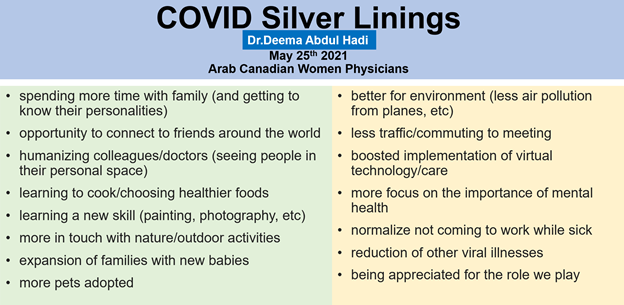
Figure 1: COVID Silver linings as perceived by a primary physician practicing in Ontario, Canada.

Source: Dr. Deema Abdul Hadi. Arab Canadian Women Physicians Conference. May 25, 2021.


Mental Health in the Gaza Strip

Gaza Strip Context

Gaza Strip is a historical Palestinian territory on the eastern coast of the Mediterranean Sea with a total area of 365 square kilometers (141 sq miles). Gaza Strip is home for almost two million Palestinians (1,918.000 in July 2020)[6], which makes it one of the most densely populated cities in the world.  A narrative overview of mental health in the Gaza Strip unpacks the overall complexity of psychology in this highly condensed population living in the largest open- air prison in the world[7] over the past 14 years.

Despite the ongoing political challenges, the blockade, and the limited access to essential medications and medical equipment, Gazans are known to be one of the most resilient and creative populations, surviving despite successive challenges over the past 4,000 years. The exposure to repetitive, multiple wars in recent history, include the launched assaults [8]on Gaza Strip in 2008-2009, 2012, 2014 and 2021. These conflicts unleashed improvised solutions in the aftermath, emerging from the urgent unmet needs of Gazans’ mental health, with a focus on post-traumatic stress disease (PTSD). However, Dr.Jabr, the Palestinian Head of Mental Health Services, argued at the Build Palestine Summit 2021[9], that in Palestine, PTSD is non-existent; it is not post traumatic, it is chronically traumatic.

Gazans are continually exposed to personal and collective psychological stressors. As explained in a study published by El Khodary et al in March 2021, children in the Gaza Strip are exposed to the uncommon situation of repetitive war-related traumatic events[10], which warrants the critical need for innovative interventional tools, including psychological first-aid programs to unpack and resolve the psychological impact of war-induced PTSD. The trauma is continuous and relentless.

Pre-COVID Mental Health Baseline Innovation Agenda

It is essential to understand the evolving mental health mindset in the Gaza Strip through the unique demographic lens of the two million Gazans. Roughly 70% are refugees (internally displaced Palestinians), of whom 50% are children, with a total median age of 18.[11] In 2018, the average unemployment was one of the highest in world according to the World Bank, reaching up to 50%, with about 80% of population dependent on international assistance[12]. Yet, the Gaza Strip and West Bank have high literacy rates reaching up to 98.7% (females 97.2%, males 98.7%). For youth (ages 15-24), literacy is 98.2%. At the national level, Palestine has an exceptionally high enrollment rate in higher education: 46% in 2007, one of the highest in the world[13].

Reflecting on the demographics, the main constituency for  mental health innovation (Figure 2) are by far the young population, including the youth, children, and their parents. Many pre-COVID mental health initiatives focused on improving children’s mental health, including the Gaza Pediatric Mental Health Initiative launched in 2014 by the Palestinian Children’s Relief Fund (PCRF)[14] to address psychologically traumatized children after the 2014 war. In 2018, PCRF moved to an innovative intervention in mental health by training local Community Based Organizations (CBOs) to provide an improved response to crises facing Gaza Strip children. Leveraging access to a global network of experts enhanced this innovative approach by engaging a global ethnopsychologist[15] at PCRF to fill a gap in mental health care in Gaza Strip, providing counsel to solve issues arising from social, cultural, religious, and ethnic factors.

Figure 2: List of key actors and enablers of health innovation. Healthcare Innovation Course April 2021 by Zayna Khayat-Rotman GEMBA-HLS2.


Post-COVID Mental Health Innovation in Gaza

The response to the mental health crisis in the Gaza Strip required innovation at multiple levels, from mobilizing mental healthcare service delivery to community-oriented psychosocial interventions which are rapidly evolving with the unfolding challenges of COVID-19 pandemic in an exhausted and mentally drained war-torn zone. The variable effective psychosocial interventions adopted by the diverse key actors (Figure 3) fit into many key innovative frameworks and concepts included in the Christensen disruption theory.

Figure 3: Elements of disruptive innovation by Christensen

Source: Christensen, Clayton M., 1952-2020. The Innovator’s Prescription: A Disruptive Solution for Health Care. New York: McGraw-Hill, 2009

Managing COVID-19 in the Gaza Strip

Although the health resources are very limited in Gaza, stakeholders took strong precautionary measures to prevent the spread of COVID-19. The Ministry of Health started testing passengers arriving in Gaza, and reinforced home quarantine in the early months of the pandemic. Then in May 2020, arriving passengers were quarantined in school buildings, hotels, hospitals, and health centers. The Ministry recognized an urgent need to address testing at scale and contact tracing, case management capacity, and risk communication and community engagement. The protection of frontline health workers was prioritized by ensuring adequate quantities of personal protective equipment (PPE) and the dissemination of knowledge and skills in infection prevention and control (IPC).

The UNICEF chapter of Palestine published educational material in Arabic for children and parents to raise awareness about the pandemic[17] and promote for preventive hygienic measures, as well as brochures addressing concerns of pregnant women and breastfeeding (Figure 4).

Figure 4: UNICEF educational brochures during the pandemic in Palestine.


Key Actors & Enablers of Mental Health Innovation in the Gaza Strip

Gaza Community Mental Health Program (GCMHP)[18]

GCMHP is a well-established mental health organization. It was founded in 1990, and has received prestigious international awards recognizing exceptional work in the fields of mental health and human rights. The non-for-profit organization offers an integrated and wide spectrum of services directed at improving the mental health of the Palestinian community, including clinical, social, research, and training services. The organization also advocates for the rights of women, children, and victims of violence and human rights violations.

GCMHP provides inclusive, integrated, and comprehensive community mental health services, including psychological assessments, counseling, psychotherapy and occupational therapy, free telephone counseling support, family and community visits, post-treatment follow-up, and supporting self-care through links with community-based organizations, schools, kindergartens, rehabilitation centers, and primary health care clinics.

GCMHP has three community mental health centers (in Gaza city, Deir El-Balah, and Khan Younis) covering all areas of the Gaza Strip. Each community center has a multi-disciplinary mental health team consisting of psychiatrists, psychologists, psychiatric nurses, and social worker.

GCMHP offers a diploma in community mental health and human rights and other specialized educational and training programs. Also, it is recognized for building capacities of professionals and actors shaping the Mental Health & Psychosocial Support (MHPSS) network in Gaza Strip (e.g. professionals working in NGOs, primary healthcare, relevant ministries, and UN agencies including UNRWA) through training and supervision sessions.

GCMHP adopts a community-based approach offering clinical therapeutic services and works on institutional capacity building, knowledge dissemination, and public awareness to combat the stigma of mental illness.

GCMHP Experience in the COVID-19 Context

At the beginning of the pandemic, GCMHP prepared an emergency response plan to address risks by utilizing available tools to help inform the development of possible solutions. Measures were applied by GCMHP to respond to different scenarios responding to the epidemiological situation and governmental decisions.

In April 2020, GCMHP suspended all group activities and outreach interventions at kindergartens, schools and in the community. The decision aligned with the state of emergency announced by the Palestinian Authority. Also, GCMHP scaled-down other activities to reduce potential exposure at its facilities and community centers.

GCMHP continued providing core services during full lockdown. Therapeutic services continued to be provided to clients at community centers. This required GCMHP to implement prevention and sanitization measures to reduce exposure, including increasing the duration between follow-up sessions for clients. GCMHP coordinated with the Ministry of Health to conduct home visits and deliver medications to patients at their homes. Other activities were continued remotely, including workshops, training, research, and education activities.

GCMHP scaled up public awareness using media tools and platforms to let the public know about its remote services including psychoeducation, remote counseling, and free telephone counseling services. The telephone counseling service operated by 7 to 10 professionals was scaled up to five channels from one, extending service hours to 12 hours a day and covering weekend days on Fridays and Saturdays. The telephone numbers of all therapists were posted on social media networks.

A culturally sensitive interventional model in Gaza strip was discussed during a Harvard-hosted webinar[19] titled “Gaza Under Siege: From Sheikh Jarrah to Gaza”. The unique model is mindful of cultural and gender sensitivities and involves the deployment of a team consisting of a male and female psychologist to the households of families exposed to psychological trauma. The team systemically screens and surveys the family members to identify patients who need further specialized psychological intervention. This “low-cost innovative business model,” where screeners and therapists meet patients in their comfort zone (patients’ homes), is saving patients’ money on transportation and provides confidentiality to ease concerns around the social stigma of receiving psychological treatment.

In summary, the main lines of intervention by GCMHP[20] include community mental health, psychosocial and rehabilitation, capacity building, awareness raising and community education, scientific research, networking, advocacy, and lobbying and mobilization. The GCMHP is a strategic partner with the Gaza Mental Health Foundation[21], which was established in 2001 to enhance mental health in Gaza.

Gaza Mental Health Foundation

The Gaza Mental Health Foundation partners with other local national, and international stakeholders to drive mental health well-being agenda in the Gaza Strip, particularly for children. In 2015, the initiative/project “We Are Not Numbers” was developed to portray the ongoing personal struggles in Gaza through writing and stories. This innovative approach includes mentoring writers in Gaza to give a much-needed voice for youth and children and tell contextual Gaza stories by Gazans, beyond the numbers highlighted in the pandemic and war news. During COVID, this provided a platform for presenting COVID diaries about the pandemic and the pandemic response. Increasing numbers of youth are highlighting their need for urgent mental health support to help them cope with the repetitive personal and collective traumas in Gaza. Some have started sharing their blogs/ diaries and experiences on social media, for example posting stories and calls for action on the “We Are Not Numbers” website.

The Foundation provides updates on COVID and the health situation in Gaza through strategic collaborations with key partners in the region. The collaboration with Gaza partners in the mental health ecosystem, like the GCMHP, is crucial for avoiding the potential negative outcomes resulting from working in silos. On the ground, the situation is challenging. When a group of psychology students in the Gaza Strip took it upon themselves to offer field work to support families traumatized by wars, without first obtaining training in psychiatry crisis management or aligning efforts with the GCMHP, some of the students involved were diagnosed with PTSD following their volunteer work, warranting treatment at GCMHP.

The NAWA

NAWA[23]  is an award winning[24] culture and arts association located in Deir Al Balah[25] in the center of the Gaza Strip. It is a non-profit organization established in 2014 by a group of educated, motivated, and dedicated youths to help empower their local community through culture, arts, non-formal education, and psychosocial support. According to their mission and vision, the services are provided, without discrimination, to thousands of Palestinian children and youth with limited access to cultural, artistic, recreational, and psychosocial support interventions, as well as to parents and educators’ empowerment.

Three years after its establishment, NAWA was awarded the Welfare Association Gaza Award for the year 2017 for its creative intervention in restoring the Saint George (Al Khidr) Monastery, which was built in the 4th century. It is one of the most ancient existing sites where a mosque and a church are located side-by-side. The historical building, which has existed for hundreds of years, was renovated and turned into a beautiful and inspiring children’s library (Figure 5).

In 2020, due to the COVID-19 lockdown, 44% of NAWA’s working days were online. This negatively impacted some activities that require social gatherings, such as children’s visits from local schools. The pandemic required exploring innovative solutions to deliver education and new ways of thinking about the future of education. Online learning is laying the groundwork for innovative distance learning solutions to ensure inclusive opportunities for preschool children who used to play at NAWA Centers prior to the pandemic. The obstacles to e-learning in the Gaza Strip involve infrastructure such as weak internet networks and frequent power outages. Further, this is insufficient awareness among students and their families of the importance of e-learning. Finally, there is low accessibility to computers or smartphones for some students, especially those in the most vulnerable areas within the refugee camps of Gaza Strip.

Working from home during the pandemic was a unique and novel experience for NAWA staff, who used 365 Microsoft Teams applications to manage remote work and build their capacity. To overcome the sudden pause of face-to-face educational activities, NAWA developed an alternative action plan to continue educational support through the provision of educational kits conducted via online tools. WhatsApp and Facebook groups were created and functioned to keep communication with parents in addition to regularly publishing videos of educational, life skills, and psychosocial support.

NAWA also realized that 2020 was a hard year on parents, mainly the mothers: The lockdown and staying at home for a very long time, taking responsibility for their children’s education tasks and follow-up, and the challenges of coping with economic pressures emerging from the lockdown. NAWA provided mothers with debriefing space and awareness sessions with activities and interventions such as self-care, psychosocial support, and child development sessions. Almost all participating mothers indicated a benefit from the psychosocial support, including a feeling of calm and self-control over their anxieties and negative emotions. An example of a successful activity was a “doll making” training course for mothers that resulted in a leveraged positive impact: acquiring new skills, making dolls for their children, reusing consumable materials to make dolls and accordingly, overcoming economic difficulties for the family.

NAWA is collaborating with GCMHP on a “supportive environment to better the future – integrating mental health services in early childhood programs at GAZA Strip–2020”. The program supports Al Hekayat Kindergarten’s psychological interventions. (Figure 6).

Figure 5: The NAWA initiative of establishing Al Khidr Library by restoring the Saint George (Al Khidr) Monastery (built in the 4th century A.D.) جمعية نوى للثقافة والفنون | الصفحة الرئيسية (nawaculture.org)

Figure 6: Al Hekayat Kindergarten established in 2011 by Reem Abu Jaber as a community contribution for Deir Al Balah. She donated it entirely to the NAWA association in 2015. جمعية نوى للثقافة والفنون | الصفحة الرئيسية (nawaculture.org)

Palestinian Children Relief Fund (PCRF)

The Gaza Pediatric Mental Health Initiative led an effort to address the needs of vulnerable children who suffer from chronic diseases such as cancer.[26]  In November 2020, they trained teams to reach out to families of children with cancer and blood diseases to offer psychological support through home group sessions. (Figure 7).
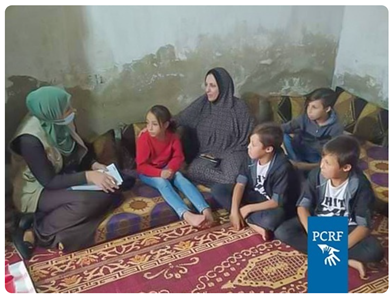
Figure 7: The psychologist conducts a home group session for a family from the south of the Gaza Strip whose four children suffer from thalassemia and weak immunity. The mother says: “I spend many days in the hospital because every child needs blood units every three weeks and they are depressed, nervous, anxious, and do not sleep well at night.” These sessions will help improve their psychological lives, which in turn increases the effectiveness of disease resistance. https://www.pcrf.net/news/home-mental-health-sessions-for-sick-children-s-families-in-gaza.html

United Palestinian Appeal (UPA)[27]: Healing Through Feeling program in Gaza Strip

UPA is a nonprofit organization founded by Palestinian-Americans in 1978, with a mission to improve the socioeconomic and cultural development of Palestinian society. Among its multiple program areas are health and wellness. The “Healing Through Feeling” (HTF) program is offered to improve mental health in the Gaza Strip, targeting the health and wellness of Gaza children by increasing awareness of their parents and teachers about trauma and its symptoms. Local mental health practitioners are provided with training and professional development to help them conduct psycho-education sessions for parents and teachers through partnerships with non-governmental kindergartens and summer camps in Gaza. The sessions also provide tools to help children cope with trauma. UPA has a licensing agreement with the American Psychological Association, granting them the rights to translate, format, and print five of their most effective children’s books for Gaza (Figure 8). After each set of psycho-social educational sessions, UPA’s mental health practitioners distribute take-home kits of art supplies, toys, and five American Psychological Association children’s books on trauma to parents and teachers who have completed the training.

In the wake of the COVID-19 pandemic, HTF interventions were modified to face the challenges of the spread of the virus in the Gaza Strip with the following adjustments:

  1. Transitioning HTF to a virtual platform via Facebook Groups, where Mental health Providers (MHPs) can share specialized content and resources on various topics in video and infographic formats on a weekly basis, and engage with parents and caregivers through comments and direct messaging.
  2. Providing training to MHPs in phone counseling services during crisis conditions, ensuring the effective rendering of services and collection of data, documentation, and facilitation of referrals.
  3. Modifying all psychoeducational materials and assessment tools such as pre- and post-intervention questionnaires and problem lists to online forms filled out by beneficiaries.
  4. Networking with kindergartens in the Gaza Strip and creating virtual psychoeducational and counseling groups for caregivers, using platforms like WhatsApp, Zoom, and Google Meet, where parents and caregivers exchange experiences, share knowledge, and acquire more skills to alleviate trauma symptoms in children.
  5. Providing individual counseling for problems raised by parents and caregivers who sought professional help within the group.
  6. Adding new optional materials for the beneficiaries and service providers that fit the needs of COVID-19 crises.

Figure 8: United Palestinian Appeal has a licensing agreement with the American Psychological Association granting them the rights to translate, format, and print five of their most effective children’s books https://upaconnect.org/programs/health-and-wellness/healing-through-feeling-program/

Patients

Patients and family caregivers are key players in mental health services innovation. Patients’ empowerment and engagement from the outset in healthcare planning is critical. This is not only because patients have access to information about illness and treatments, but because they also have access to each other – exchanging experiences and rating quality-of-care experiences.

The notion of having access to each other (as per Susannah Fox tweet in 2014[28]), may be new to Western communities, yet it is culturally embedded in many Middle Eastern communities. Patients actively exchange medical experiences without prompting. However, this becomes a major challenge when patients feel entitled to strongly recommend certain medications that worked for them or their neighbors. This is a risky behavior in a jurisdiction that allows for over-the-counter purchase of prescription medications.

It is interesting to label a health behavior as innovative when it is discouraged in certain cultures to avoid adverse medical effects such as drug addiction. Drug addiction, for example to Tramadol, is an important mental health problem in the region.[29]

Startups like “Momy Helper”

As for innovative technology to help parents in Gaza psychologically, a 2019 startup that developed an app “Momy Helper” (Figure 9) was featured in The Independent. The app, founded by Nour Al Khoudary, uses Arabic language to support mothers.It addresses a taboo in the Middle East of “being a mother who cannot cope” and aims to overcome the social stigma around mental health. The app is registered in Delaware and connects Gazan and Arabic speaking women with therapists to provide confidential care.

Domestic violence and psychological abuse of women is on the rise in the Gaza Strip, inevitable psychosocial consequences induced by the high unemployment and poverty rates, as well as the pandemic lockdown. Consequently, depression is on the rise in Gaza Strip.

Figure 9: (Screen shot of Momy Helper website. Users can pay for hour-long consultations with more than 100 specialists). Source: https://www.independent.co.uk/news/world/middle-east/gaza-momy-helper-app-arabic-mothers-parenting-psychology-a8887946.html


Barriers & Opportunities: The Role of Culture

Beyond the obvious top three barriers to innovation in mental health in Gaza — political, financial, and workforce — to an important, often overlooked barrier, culture. Mental health is generally undervalued in Palestine. This is not unique to Palestinians. A recent article discussing the Saudi mental health landscape highlights overlapping Saudi and Palestinian cultural barriers despite contrasting financial capabilities and the relatively stable political conditions in Saudi compared to Palestine[31].

The cultural barriers are related to the belief that collective resilience may ease the psychological trauma in the aftermath of war or the pandemic and hamper early intervention to contain and comfort affected population. Without timely and effective intervention, those who are exposed to psychological trauma particularly, in the war-torn zones, will continue to suffer the long-term consequences of PTSD or “ongoing” traumatic stress disorder. It’s a national duty to increase awareness and expand the outreach for patients seeking and receiving psychological interventions to encourage harnessing self-care with tools addressing mental well-being. The societal mindset of considering mental health as a taboo must shift to enable the emergence of very much needed innovative interventional tools in Gaza to facilitate their adoption, implementation, and evaluation at both community and institutional levels.

A compelling opportunity is to build capacity of mental health providers in the Gaza Strip by providing training programs to equip them with the appropriate skillsets and interventions to bridge the gap of the unmet needs.

Looking Forward

There is silver lining in the COVID pandemic is that it expedited innovation in mental health and mobilized care models to cover a wider spectrum of non-institutionalized patients with cost- effective virtual care. During the pandemic, the stigma around mental health has decreased, although substantial work is still needed to break societal and cultural barriers in LMICs including the Gaza Strip. Beyond COVID, serious international and national efforts are needed to end the longstanding political suffering resulting in exceptionally high PTSD[32] and “ongoing” traumatic stress disorder in war-torn Gaza.

TO READ THE ARABIC TRANSLATION OF THIS ARTICLE, PLEASE CLICK HERE.

Acknowledgements

Zayna Khayat, Future Strategist, Teladoc Health, Adjunct Faculty Rotman School of Management- University of Toronto.

Dorgham Abusalim, Communications Manager, United Palestinian Appeal.

Reem Abu Jaber, Executive Director NAWA for Culture and Arts Association.

Steve Sosbee, President/Founder at Palestine Children’s relief Fund.

Nadia Rahwangi, Family and Marriage counselor.


References

[1]  https://www.thelancet.com/action/showPdf?pii=S0140-6736%2820%2930460-8#COVID19

[2] Jane Perkis et al, April 13, 2021 https://doi.org/10.1016/ S2215-0366(21)00091-2, Lancet Psychiatry 202

[3] https://www.thelancet.com/action/showPdf?pii=S2215-0366%2821%2900025-0

[4] https://catalyst.nejm.org/doi/full/10.1056/CAT.20.0399

[5] https://time.com/5835960/coronavirus-mental-illness-stigma/

[6] https://www.indexmundi.com/

[7] https://www.nrc.no/news/2018/april/gaza-the-worlds-largest-open-air-prison/

[8] https://en.wikipedia.org/wiki/History_of_Gaza

[9] Summit 2021 – BuildPalestine

[10] https://www.ncbi.nlm.nih.gov/pmc/articles/PMC7137754/pdf/fpsyt-11-00004.pdf

[11] https://www.indexmundi.com/gaza_strip/demographics_profile.html

[12] https://www.unrwa.org/where-we-work/gaza-strip

[13] 2 https://en.wikipedia.org/wiki/Education_in_the_State_of_Palestine

[14] https://www.pcrf.net/gaza-pediatric-mental-health-initiative

[15] https://www.pcrf.net/team/dr-alberto-mascena.html

[16] Christensen, Clayton M., 1952-2020. The Innovator’s Prescription : a Disruptive Solution for Health Care. New York :McGraw-Hill, 2009.

[17] مرض فيروس كورونا (كوفيد-19) | UNICEF دولة فلسطين

[18] https://gcmhp.ps/

[19] https://youtu.be/TIZOua3hdlQ

[20] https://gcmhp.ps/publications/1/116

[21] https://www.gazamentalhealth.org/

[22] https://wearenotnumbers.org/home/About

[23] https://nawaculture.org/Home

[24] https://nawaculture.org/Home/Page/5?Lang=en

[25] https://en.wikipedia.org/wiki/Deir_al-Balah

[26] https://www.pcrf.net/gaza-pediatric-mental-health-initiative

[27] United Palestinian Appeal (upaconnect.org)

[28] Susannah Fox on Twitter: “The most exciting innovation of our era is not access to medical information, but access to each other.” / Twitter

[29] https://www.ncbi.nlm.nih.gov/pmc/articles/PMC3082799/

[30] https://www.independent.co.uk/news/world/middle-east/gaza-momy-helper-app-arabic-mothers-parentingpsychology-a8887946.html

[31] https://www.thenationalnews.com/lifestyle/wellbeing/why-saudi-arabia-s-mental-health-landscape-needsmore-attention-we-are-way-behind-in-awareness-1.1232736

[32] https://euromedmonitor.org/en/article/4497/New-Report:-91?fbclid=IwAR3XX7cXf3GcVpZ7MUTBiQ74a4nyfYQc3c8-cp_zliVPvDqDv8HQpEWXzh0


Healthcare – An Industry Unlike Any Other Goes Global

Lilac Nachum, PhD, City University New York, Baruch College [1]

Contact: lilac.nachum@baruch.cuny.edu

Abstract

What is the message?

How the balance between the global and the local is transforming the scope of opportunities and raising challenges for healthcare professionals and institutions.

What is the evidence?

This paper is derived from a course on the globalization of healthcare developed and taught by Professor Nachum as part of Baruch College MBA program for Healthcare professionals. It is based on a variety of secondary sources and was informed by class discussions with the healthcare professionals enrolled in the course

Submitted: March 19, 2018; accepted after review: June 15, 2018

Cite as: Lilac Nachum. 2018. Healthcare: An Industry Unlike Any Other Goes Global. Health Management Policy and Innovation, Volume 3, Issue 2.

The Globalization of Healthcare

The healthcare industry[2] has been transformed in recent years from what was traditionally a primarily domestic industry into an increasingly global industry, defined by cross-national principles.  In parallel to the forces that have driven the globalization of the industry, however, there have been others that have resisted these developments and anchored the industry in national systems of healthcare delivery and consumption. This interplay between the global and the local is emerging as a predominant feature of the industry that is shaping its contemporary dynamics and will have significant consequences in the years to come. In this paper, I seek to explicate this development and examine the opportunities and challenges that it holds for healthcare providers and the policymakers who oversee the industry.

Healthcare: An Industry Unlike Any Other

The healthcare industry is distinctive in at least three ways. For one, in contrast to most other industries in which the ultimate goal of firms is profit-maximization, in healthcare this goal often poses a challenge to value creation through quality care. As an industry whose value creation lies in extending lives and enhancing their quality, there is a strong moral dimension attached to value creation, producing a delicate balance between this imperative and the different and often conflicting demands of economic performance and survival. Notwithstanding notable successes in combining value creation with financial goals, these goals often conflict with each other and impose tradeoffs. The vague notion of what is to be maximized challenges the development of performance measurement and creates scope for different points of view as to the appropriate indicators that should be used.

Further, the industry is characterized by distinctive structural issues. The consumers – patients with symptoms – are typically ignorant about the cause of their symptoms and the required treatment for relieving them; the suppliers – healthcare professionals, in affiliation with healthcare institutions or on their own, who diagnose the cause of the symptom, prescribe the treatment and may implement it – are, at least in the developed world, typically not paid by the consumers. Rather, market transactions involve one and often more intermediaries who administer the payment.[3] These intermediaries themselves vary in terms of their goals, agency and power, and their impact on the engagement between the healthcare provider and the patient receiving treatment.

Lastly, the healthcare industry stands out in terms of the demand for its output. Given the complex structure of the industry, identifying the actual source of demand is a challenge as it includes the patient, the doctor who prescribes the treatment and may implement it, and the payer for the service (at least in countries where the payers and the customers are two separate entities). Demand is often inelastic (what is the monetary value of life?) and is prone to information asymmetries of numerous kinds that influence the transactions and place much power in the hands of the intermediaries who pay for the service.

The distinctive attributes of the healthcare industry assume additional complexity as the industry globalizes. The ambiguity regarding the ultimate goal of healthcare, along with the subsequent difficulty of devising corresponding performance measures (notably whether performance should be measured by financial indicators, quality of care, outcome of treatment, or other metrics), are magnified by country-specific philosophies of life and mortality and varying perceptions regarding universal access. The United Nations (UN) Universal Declaration of Human Rights has long declared access to healthcare a basic human right: ‘everyone has the right to a standard of living adequate for the health and well-being of himself and of his family, including food, clothing, housing and medical care’.[4] Although more than half a century old, this assertion has not been adopted by all countries that are members to the UN in a comprehensive way. Variations in moral philosophy surrounding healthcare and the extent to which it is seen to be a universal right introduce stark differences in the healthcare industry across countries. These variations are reinforced by varying views of human ability to influence life quality and longevity versus those of faith and religion, including different perceptions of the value of life itself.

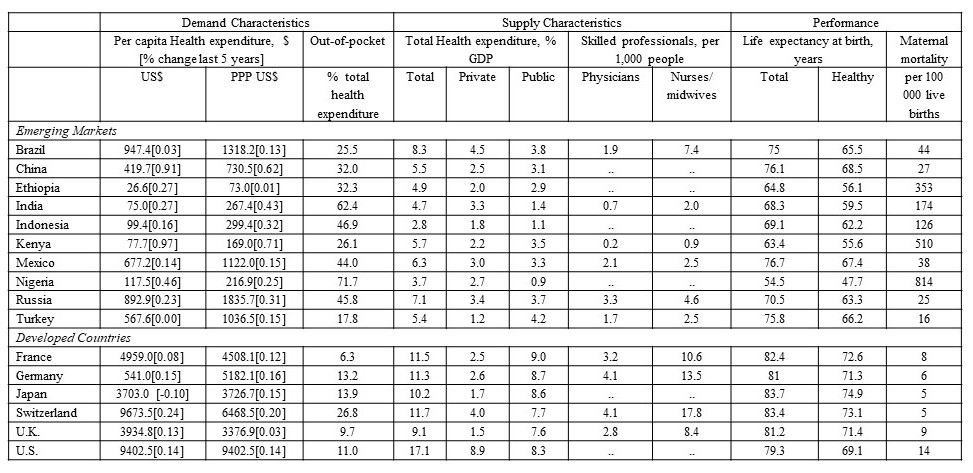
These philosophical and cultural differences bring about varying views as to who should be responsible for healthcare provision and who should pay for it. The UN International Covenant on Economic, Social and Cultural Rights assigned the responsibility for the provision of healthcare to national governments: ‘[every nation is responsible for] ‘the creation of conditions which would assure, to all, medical service and medical attention in the event of sickness’. [5] But this declaration has not been universally practiced. The size adjusted government expenditure on healthcare varies enormously across countries (Table 1). Country-specific approaches differ in terms of the ultimate provider and payer for healthcare, whether private or public, or as is the case in many developing countries – by the consumers. There are also considerable country differences in terms of access to healthcare services and its coverage. As the data in Table 1 show, out-of-pocket payment accounts for up to three quarters of total healthcare expense in countries such as Nigeria and India, but represents around a tenth or less of the total in many developed countries. These variations are accentuated by differences in the level of economic development and that affect the availability and quality of services (Table 1).

Table 1. Selected Healthcare Indicators by Country
Latest available: 2014-2016

WHO, World Health Statistics http://who.int/entity/gho/publications/world_health_statistics/2017/en/index.html; World Bank Development Indicators Database

Country differences also express themselves in the nature of demand. Varying perceptions of healthcare versus healing by forces of faith and religion, coupled with different views of modern versus traditional medicine, often determine the level of demand for healthcare services and its nature. In addition, education levels influence information asymmetries between participants in the complicated transactions that define the industry. Lastly, differences in life style, diet, and other ongoing activities affect the types of diseases prevalent across countries and their frequency.[6] The data in Table 1 show vast variations in per-capita healthcare expenditure, indicative of these differences in the demand for healthcare across countries. In the following sections I discuss how the tension between the global and the local is shaping the nature of supply and demand for healthcare around the world.

The Tension between the Global and the Local: Demand and Supply for Healthcare Services

The forces that are driving the healthcare industry to become increasingly global and those that connect it to national systems manifest themselves within the framework described above. They are apparent in relation to both the demand for healthcare services and its supply. On the one hand, major participants in the healthcare industry, including healthcare professionals and institutions, drug producers, and consumers, have become more mobile, drawing healthcare delivery and consumption into global networks of interactions. At the same time, cultural, institutional, and behavioral differences continue to anchor the industry to different countries and arrest globalization.

Global and Local Demand

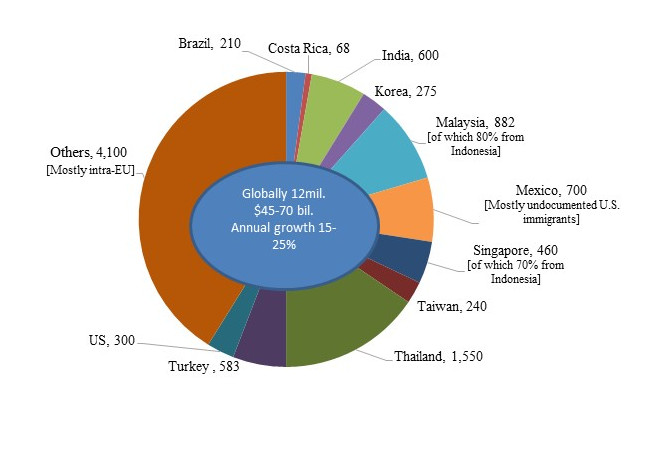
A major development that has globalized demand for healthcare is what has come to be known as ‘medical tourism’, that is, the travel by patients for medical treatments to other countries. While this phenomenon has existed for decades and by some accounts centuries, until recently it was small and confined to wealthy people from developing countries traveling to Western countries for medical treatment. What is new is the recent emergence of medical tourism from developed countries to emerging markets (Figure 1), driven by the development of local healthcare institutions in emerging markets and improvement in the quality of their healthcare services.

Figure 1. Medical Tourism
Destination countries by number of patients (in thousands), 2015

Patients Beyond Borders, http://www.patientsbeyondborders.com/medical-tourism-statistics-facts
Based on estimates by Deloitte, McKinsey, Gallup, the Economist, host countries health and tourism ministries

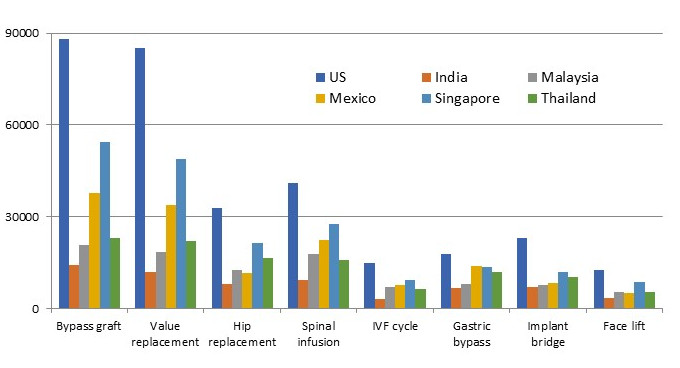
These institutions offer medical services for a fraction of the costs in developed countries (Figure 2) and minimal waiting time.[7] Combining a low-cost labor force with efficient delivery, assisted by state-of-the-art technology, hospitals in emerging markets have managed to cut costs and shorten delivery time to levels unimaginable in the developed world.[8] Accreditation by U.S. and Global Accreditation Associations provides quality assurance for patients and payers, and have removed major obstacles for the growth of medical tourism. By 2016 more than 600 hospitals worldwide were accredited by the Joint Commission International Accreditation, a number that has been growing by about 20% annually[9]. In 2015 medical tourism amounted for an estimated $40-$75 billion worth of economic activity, or about 1% of global healthcare expenditure.


Figure 2. Cost Variations of Medical Procedures
US$: 2015

Patients Beyond Borders

The development of medical tourism has captured the attention of healthcare insurance services in the developed world. Large U.S. insurers have examined these offshore developments as low-cost alternatives for U.S. services, and some have incorporated them in their offerings. Britain’s NHS is considering partnerships with leading players in India and Thailand as a way to cut waiting times.

The growth in medical tourism suggests that at least in the short term, it offers solutions to limitations of healthcare systems in developed countries (i.e., high costs in the U.S. and long waiting lists in Europe). The long-term impact of this development on progress in addressing the causes that generate the demand for medical tourism is unclear. It appears likely that in the mostly privately-owned U.S. industry, competition from low-cost alternatives would create pressure for increased efficiency and lower costs, as I discuss in some detail below. This in turn could reduce demand for low-cost solutions elsewhere. The response of the government-owned healthcare system is Europe is more difficult to predict, as it less likely to be subject to market forces. European governments may opt for using medical tourism as a low-cost alternative that enables reduction of government resources allocated for healthcare rather than adding capacity to their local industries.

At the same time that demand for healthcare continues to expand globally, the type of demand varies significantly across countries, reflecting for the most part country variations in the prevalence of diseases. For instance, the number one cause of death in the developed world is heart disease, accounting for more than 12% of total deaths, whereas in mid- and low-income countries most deaths are caused by cerebrovascular disease (14%) and respiratory infections (11%).[10] Likewise, the incidence of cancer is three times higher in China than in India.  The disparity in Africa is even greater.[11]

Global and Local Supply

On the supply side, the major providers of healthcare, notably healthcare professionals, hospitals, and pharmaceutical and other med-tech companies, have vastly broadened their global reach in recent decades. Movement of healthcare professionals, predominantly from emerging markets to developed countries, is not new, but its magnitude has grown considerably, fostered by reduction in traveling costs and liberalization of immigration policies for healthcare professionals. Initially, nurses came most commonly from the Philippines, but more recently, their national origins have widen considerably.[12]

These developments have often been driven by mismatches between supply and demand that have proliferated around the world – according to the World Health Organization (WHO) by more than seven million healthcare professional providers in 2016, a number that is estimated to double by 2035. More than two-third of the 300 respondents to the American College of Healthcare Executives’ annual survey reported experiencing shortage of registered nurses and primary care physicians, and more than half noted shortage of specialized physicians.[13] Leading U.S. hospitals have been importing nurses since the 1980s in the face of a large nursing shortage.

The movement of doctors across countries has also been prevalent, although less common than that of nurses due to different qualification requirements. According to one estimate almost 40,000 Nigerian doctors practice outside Nigeria, three-quarter of them in the U.K.[14] Whereas for the most part, these moves are initiated by individuals seeking to further their careers and better their lives, in some cases they are assisted by governments. For instance, the Cuban government, under the auspices of the WHO, exports local doctors to Brazil, pays their salaries, and receives payment for their services from Brazilian authorities, turning these transfers into a major source of the government’s foreign currency.[15]

Industry has a longer track record of global expansion. Pharmaceutical companies, in particular, have long been global. The high cost of drug development that gives rise to vast scale economies, coupled with short spans of patent protection, have pushed pharmaceutical companies to expand the market for their drugs across the globe.

Most recently, hospitals, which were traditionally deeply grounded in particular localities, also have started to globalize. Leading hospitals in emerging markets are rapidly expanding overseas. India’s Apollo Hospitals Group, the largest private hospital group in Asia, operates 55 hospitals with 9,215 beds, and has facilities in India, Sri Lanka, Bangladesh, Ghana, Nigeria, Mauritius, Qatar, Oman, and Kuwait, and plans for further global expansion. Only regulations have prevented it from entering the U.S. [16]. Some of the most prestigious U.S. hospitals, among them Johns Hopkins, Cleveland Clinic, Harvard, and Duke, have formed partnerships that offer combined treatments in the U.S. and overseas. Similarly, Canadian hospitals such as SickKids Children’s Hospital have begun to expand internationally.

The major barrier for the globalization of healthcare supply is country regulations. Doctors are tied to the locality in which they receive their medical training by varying qualification requirements that raise the cost of movement across countries. Foreign hospitals’ expansion is also limited by country restrictions, making this segment of the healthcare sector the least global. The share of FDI in healthcare services is a fraction of total service FDI in both developed and developing countries, although it registered substantial growth over the last decade. In an era where cross-border M&A activity has been mushrooming across industries, there has been almost no cross-border acquisitions of hospitals (although domestic mergers are common).[17]

U.S. hospitals and other healthcare providers have been among the world’s most active foreign investors, particularly in Latin America and the U.K.[18]. The Federation of America Hospitals lists almost a hundred overseas hospitals owned by U.S. major hospitals. However, there is no corresponding activities the other way around.  For instance only regulations prevented Indian hospitals from establishing themselves in the U.S. Whereas countries around the world, most notably developing countries, have become increasingly open to foreign ownership of healthcare services, the U.S. has been highly restrictive.

Regulations and country variations have been a drag also on the global expansion of pharmaceutical companies. The regulatory environment that surrounds drug development, testing, and approval varies considerably around the world, undermining advantages of global scale. Varying levels of patent protection across countries are another challenge for the globalization of pharmaceutical companies, and variations in diseases and their prevalence impact global standardization of drug development.

Implications for the Healthcare Industry

As the home of some of the world’s most prestigious hospitals and healthcare professionals, developed country institutions and professionals are well-positioned to benefit from the globalization of the healthcare industry. Global developments increasingly make it possible to scale the reputation of hospitals and professionals globally and exploit them on a global scale. It enables local institutions in these countries to attract patients from around the world to their existing facilities and increase their share of the rapidly growing medical tourism. As emerging market consumers become wealthier, demand for high quality healthcare services in these countries is increasing, and could foster medical tourism to developed countries.

In addition to attracting patients to developed countries, these constituencies should also be able to expand their scope globally by establishing themselves overseas, by either direct investment or through various forms of partnerships with local providers in foreign countries. This process will vary according to the type of services provided and their comparative advantage in different countries.

Some reputable U.S. hospitals have recently been experimenting with such endeavors, and would likely pursue these further as a means to leverage on their expertise and increase market share.  The Directory of U.S. Hospital Partnerships with Foreign Hospitals, published by the American College of Healthcare Executives and the American Hospital Association, lists dozens of partnerships. To qualify for inclusion in the Directory, partnerships need to be deep and comprehensive, and form ‘a cooperative and mutually beneficial relationship between a U.S. hospital and a hospital in a different country, … designed to facilitate the exchange of knowledge, technical information and other insights that contribute to improved healthcare services in both hospitals.’[19]

At the same time, global developments could also pose considerable challenges to hospitals and healthcare professionals in the developed world. The forces that enable them to broaden the potential market for their services also increase cost pressures and put them in competition with low-cost providers. These constituencies, notably in the U.S., have little experience in cost-driven competition and this could pose a serious challenge for them. The strongest impact of these forces will probably be felt in what are today the most lucrative parts of the industry, namely the highest cost operations and procedures. The high cost of these treatments compared to the emerging alternatives overseas will increase the incentives to travel elsewhere. These developments will put pressure to improve the consumer experience (for instance, by providing rehabilitation facilities for medical tourists and accommodation for accompanying relatives) and at the same time cut costs in order to stay competitive.

The challenge for these constituencies lies in designing strategies that are responsive to the tension between the global and the local that I outlined in this paper, and take advantage of them by articulating the appropriate balance, considering their distinctive sources of strengths and weaknesses. The rewards for doing this properly are vast.

References

  1. This paper is derived from a course on the globalization of healthcare developed and taught by Professor Nachum as part of Baruch College MBA program for Healthcare professionals. An earlier version of this paper appeared as Baruch College’s Weissman Center Occasional Paper, 2018. The author acknowledge with deep gratitude the excellent comment of the Editor during the review process.
  2. The health care industry is defined broadly to include health care professionals (e.g., doctors, nurses), healthcare institutions (e.g., hospitals), pharmaceutical companies, and producers and suppliers of equipment for healthcare.
  3. This is the common practice in developed countries. In developing countries large share of healthcare costs is covered by the consumers, as will be discussed below.
  4. Article 25, 1948
  5. Article 12, 1966
  6. Farmer et al., Reimagining Global Healthcare: An Introduction. 2013; Holtz C. (ed.), Global Health Care: Issues and Policies. 2017; Reid, The Healing of America: A Global Quest for Better, Cheaper, and Fairer Health Care. 2010.
  7. Siciliania, Moranb and Borowitz. Measuring and comparing health care waiting times in OECD countries. Health Policy, December 2014
  8. Wall Street Journal, The Henry Ford of Heart Surgery: a Factory Model for Hospitals. November 25, 2009; Hub and Spoke, HealthCare Global. Harvard Business School Case #313030, 2015.
  9. Joint Commission International https://www.jointcommissioninternational.org/about-jci/jci-accredited-organizations/
  10. World Health Organization (WHO), The Global Burden of Disease Project.
  11. International agency for research on Cancer, http://globocan.iarc.fr/Pages/fact_sheets_cancer.aspx
  12. Brush et al., Imported Care: Recruiting Foreign Nurses to U.S. Health Care Facilities. Health Affairs 2004
  13. http://www.ache.org/pubs/research/ceoissues.cfm
  14. https://www.vanguardngr.com/2017/12/medical-tourism-ambode-harps-retraining-medical-practitioners/
  15. https://www.nytimes.com/2017/09/29/world/americas/brazil-cuban-doctors-revolt.html?_r=1
  16. Health City Cayman Islands. Harvard Business School Case #714510, 2014.
  17. Holden, C. The Internationalization of Corporate Healthcare: Extent and Emerging Trends. Competition & Change, 2005, 9(2), 185-203; Holden, C. The Internationalization of Long Term Care Provision. Global Social Policy, 2002, 2(1), 47-67; Herman L. Assessing International Trade in Healthcare Services. The European Centre for International Political Economy Working Paper No. 03/2009, Brussels 2009.
  18. Jasso-Aguilar, R. et al. Multinational corporations and health care in the United States and Latin America: strategies, actions, and effects. Journal of Health and Social Behaviour, 2004, 45, 136-157.
  19. https://www.ache.org/foreignhospitaldirectory.cfm

Value Chain Integration Strategies in Global Health

Raman Sohal, Onil Bhattacharyya, Will Mitchell, University of Toronto 

Contact: Will Mitchell, william.mitchell@Rotman.Utoronto.Ca 

Abstract

What is the message?

Social enterprises have been able to leverage resources from a range of partners along the health systems value chain in order to fulfil their core mission of health services delivery at the base of the pyramid. The ability to draw upon existing infrastructure and distribution channels has enabled these social enterprises to significantly reduce their start-up and ongoing costs and simultaneously expand their reach. As the examples illustrate, value chain integration requires health services organizations to be deliberate in reaching disparate types of partners that are needed along stages of their value chains from financing, setting up a clinic, and health service delivery. In doing so, the lead organizations benefit from enabling strategies in the form of developing an efficiency core and gaining strength in four key types of management skills.

What is the evidence?

A mixture of primary interviews plus reviews of studies in the published literature.

Submitted: October 17, 2017. Accepted after review: December 20, 2017

Cite as: Raman Sohal, Onil Bhattacharyya, Will Mitchell. Value Chain Integration Strategies in Global Health. Health Management Policy and Innovation, Volume 3, Issue 1.

Introduction

Health systems around the world are increasingly recognizing the benefits of value chain integration (VCI) strategies to foster scalable services (Kim, Farmer, & Porter, 2013; Porter & Teisberg, 2006). VCI strategies involve coordinating the activities of partners that help design, develop, produce, and deliver goods and services to customers (Adner, 2006; Mitchell, 2014). These strategies help global health services that target base of the pyramid clients overcome barriers to growth that arise from the complexity of the broader ecosystem in which healthcare activities are embedded. VCI offers the potential for health service organizations to work with skilled partners for funding, health services delivery, logistics, political support, and other key elements of the healthcare value chain. Yet we are only beginning to understand the nature of VCI in global health, as well as the challenges that organizations face in implementing the strategies.

This qualitative study examines how health services delivery organizations use value chain integration to achieve scale lower and middle income countries. We describe how ten private sector global health organizations operating in Africa, the Americas, and Asia are using VCI strategies, highlighting both successful routes and challenges to achieving sustainable scale. We selected the cases based on their ability to help us refine and develop categories of VCI as an emerging conceptual framework in global health delivery. We identify three main mechanisms for using a VCI strategy to scale up health services delivery: identifying mutual dependency with partners, creating an efficiency core (Wong et al., 2014), and building a strong set of four types of management skills, including financial skill, quality management, supply chain management, and client relationships. The base conclusion is that – despite real challenges – creating value chain integration partnerships with diverse actors can help global health enterprises serve clients effectively.

Table 1 summarizes the ten cases. Four organizations operate in one country while the remaining six operate in two to 42 countries. Six have for-profit legal structures and four are non-profit.We drew on existing literature and then supplemented the data by interviewing leaders of five of the organizations. The published research and interviews provide lessons about how organizations implement VCI strategies.

Table 1. Examples of Value Chain Integration Strategy
 Organization Mutual Dependency Management Capabilties Efficiency Core
1. Healthy Entrepreneurs

(Congo, Uganda, Tanzania, Ghana, and Haiti)


Source: Literature

Health Entrepreneurs (HE) has developed a full supply and distribution chain solution to bring high-quality and affordable health products to rural regions. HE streamlines the supply chain, reducing inefficiencies caused by “middlemen” and sub-contractors. Their team equips, trains, and provides technical support to a network of franchisees that in turn provide health education and sell essential medicines and products to remote communities. Healthy Entrepreneurs offers of a combination of health education, screening, counseling, referral and access to products. HE has developed a full supply and distribution chain solution to bring high-quality and affordable health products to rural regions.
  • Supply chain model
  • Franchise model
  • Last mile distribution model
2. Jacaranda Health

(Kenya)


Source: Literature and interviews

By offering high-quality maternity services, Jacaranda has been able to develop strong relationships with government clinics in Kenya. Jacaranda provides capacity building training to government hospitals to help them improve their maternity services. Jacaranda Health in Kenya, operates a chain of maternity hospitals and provides comprehensive maternity care at a fifth of the cost of other private hospitals. Jacaranda uses a fee-for-service model and combines quality and affordability in its service offering. The maternity hospitals are located in in peri-urban Nairobi, in the backyards of the women who need them most. The organization provides respectful patient-centerd obstetric care, safe delivery, family planning, and postnatal care.
  • Clinic chain
  • Revenue generation
  • Narrow clinical scope
3. Lifenet International

(Burundi, Uganda, and the Democratic Republic of the Congo)

Source: Literature and interviews

Lifenet originally piloted a nurse-led model in which nurses would do outreach in the communities to deliver primary care. During the pilot phase, however, Lifenet realized that existing church-run medical centers not only already provided healthcare to Burundi’s rural poor, but these centers had significant buy-in from the community. Rather than set-up a parallel system, Lifenet abandoned the nurse-led community model and developed a franchise conversion model to bring existing providers into the Lifenet network, which now includes 90 health centers in three countries in Africa in Burundi, Democratic Republic of the Congo and Uganda. Lifenet provides comprehensive solutions to management, medical and supply problems. LifeNet International’s conversion franchise model includes nurse training, management training, growth financing, and pharmaceutical supply to transform quality of care and increase range of services in primary healthcare facilities in Burundi, Uganda, and the DRC. Lifenet provides logistics, financing, equipment and training services to existing, faith-ba  sed health centers in East Africa. Lifenet’s partners finance their own operations, as well as medicine and equipment purchases, ensuring local responsibility and sustainability.
  • Conversion franchise model
  • Medical training
  • Management training
  • Pharmaceutical supply program
  • Loan program
4. North Star Alliance

(12 countries in Sub-Saharan Africa)


Source: Literature and interviews

North Star has forged alliances with different types of actors in order to obtain the resources, both tangible and intangible, its needs in order to deliver healthcare to mobile populations along the transport corridor in Africa.  North Star Alliance received significant public support from the humanitarian, government and the private sector. The impact of the HIV/AIDS crisis on a productive workforce (i.e., truck drivers) enabled North Star to leverage support from potential allies such as the United Nations World Food Programme and from partners in the commercial sector, such as the global courier company TNT Express. These partnerships enabled North Star to obtain resources and capabilities needed to launch the Roadside Wellness Centre network in ten countries in Africa. North Star Alliance is a non-profit that has established a network of roadside health clinics at major truck stops and border crossings to serve hard-to-reach populations across Africa, including truck drivers, sex workers and general community members. North Star operates in collaboration with government, businesses and civil society partners and identifies disease hotspots along major transport routes, where clinics are housed in blue-box shipping containers. North Star forms teams of local community health workers to conduct outreach activities to reach its target population, which comprises mobile populations.  North Star uses principles of logistics and supply chain management to establish network of Roadside Wellness Centres in 10 countries in Africa. The organization has developed an electronic health passport that syncs across 10 countries.
  • Standardized network of RWCs along transport corridor in Africa
  • Lean staffing model
  • Electronic health passport system that syncs across 10 countries
  • Task-shifting
5. Operation Asha

(Cambodia, India)


Source: Literature

Operation ASHA partners in locations with extensive foot traffic. For patient convenience, Operation ASHA establishes TB treatment centers within strategically placed shops, homes, temples, and health clinics. The organization also works closely with  other NGOs and governments at international and national levels. Patient convenience, community mobilization, and comprehensive counselling form core components of the organization’s offering. Operation ASHA trains community members (often former patients) to become TB health workers who are responsible for identifying new patients, ensuring adherence to the drug regimen, and carrying out regular educational campaigns.
  • Shared distribution channels
  • Community Health Worker Model
6. Penda Health

(Kenya)


Source: Literature and interviews

Penda Health partners with a range of partners including factories, universities and insurance companies in order to scale its operations in Kenya. By building alliances with organizations that can offer a paying client base, Penda not only scales up its operations, it also strengthens its sustainability. Penda Health operates a chain of primary care clinics in Kenya. Penda offers affordable, high-quality, standardized, evidence-based medical care for the whole family, including scarce women’s sexual and reproductive services such as breast and cervical cancer screening, provided by friendly, caring staff via an outpatient clinic model.  In addition to curative healthcare services, Penda offers “Wellness Checks” for men, women, and children and some counseling, which all fall under the umbrella of preventive healthcare services.
  • Clinic chain
  • Revenue generation
  • Task-shifting
7. Riders For Health

(Seven Countries In Sub-Saharan Africa)


Source: Literature

The Riders for Health network of technicians regularly travels to service vehicles in the communities that health workers serve. Riders works with ministries of health, international and African NGOs, private-sector organizations, local community-based organizations, and religious groups, to improve access to healthcare for over 21 million people. Riders for Health manages motorcycles, ambulances, and other four-wheel vehicles used in the delivery of healthcare in seven countries across Africa. Rider’s network of technicians regularly travels to service vehicles in the communities that health workers serve. Riders works with ministries of health, international and African NGOs, private-sector organizations, local community-based organizations, and religious groups to improve access to healthcare for over 21 million people. In addition, Riders’ programs provide training and employment opportunities to build local capacity.
  • Fleet management system for healthcare delivery in Africa
8. Unjani Clinics

(South Africa)


Source: Literature and interviews

Unjani Clinics is backed by a logistics supplier, Imperial Health Sciences Ltd., through its CSR activities. Unjani has been able to obtain the start-up capital needed to establish a social franchise of primary care clinics through Imperial. Imperial provides the working capital for Unjani Clinics to be set up. Unjani Clinics also enable Imperial to pursue opportunities to grow new markets for clients in Africa. Imperial was cognizant that by catering for a segment of the population which was currently under served, Unjani Clinics offered a means to grow its core pharmaceutical and consumer clients’ sales volumes. Unjani Clinics uses a social franchise model to achieve scale in South Africa.  The clinics provide primary healthcare services at an affordable price to under-served communities in South Africa. The fee-based service model enables sustainability and the empowerment of black women through the use of a franchised business model. Unjani’s clinics are made in South Africa from converted second hand shipping containers. Critical to the success of each location is the selection of the nurse and the clinic location. Nurses are selected from the communities they serve. Unjani provides back-end support such as logistics, supply chain, pricing and supplier services, as well as training and mentoring to ensure that each nurse has the necessary tools to own and operate a sustainable business. ·       Task-shifting

·       Community nurses

·       Social franchise

9. VisionSpring 

(42 countries in Africa, Asia, and the Americas)


Source: Literature

VisionSpring has leveraged its partnership with existing organizations, such as BRAC, to expand its reach in other countries. While in South America VisionSpring has adopted a hub-and-spoke model using its own stores as its main distribution channels and a variety of local partners, in Bangladesh VisionSpring leverages the national distribution capacity of a single partner – the Bangladesh Rural Advancement Committee (BRAC). This partnership enables VisionSpring to take advantage of BRACs’ vast network as a distribution platform. VisionSpring uses a “business in a bag” model to generate revenue that enables it to provide eye screening for the poor. The organization also uses shared distribution channels to expand its reach in 43 countries. VisionSpring uses a Vision Entrepreneur (VE) distribution model: this involves training and empowering local people, mostly women, to conduct basic eye exams in low-resource settings and to sell low-cost, durable reading glasses. One pair, with a case and cleaning cloth, costs from US$2.50 to $4.00. VisionSpring employs a retail component to its business in India through both stand-alone optical shops and shops located within partner hospitals and surgical centers. These optical shops serve base-of-the-pyramid customers by providing comprehensive eye exams and selling affordable prescription, reading and sunglasses. ·           Hub-and-spoke model

·           Vision Entrepreneurs

·           “Business-in-a-bag” model

10. Ziquitza Healthcare Limited

(India)


Source: Literature

Ziquitza Healthcare Limited offers “white labelling” opportunities, which enables private hospitals to brand Ziquitza ambulances. While the hospitals receive publicity and visibility through branded Ziquitza vehicles, Ziquitza in return is able to mobilize the financial resources it needs to subsidize its core operations, which focus on emergency transport for the poor. In sum, Ziquitza has established a range of revenue streams that allow it to remain socially inclusive and financially sustainable.


Ziquitza is built on two models for emergency transportation: Dial 1298, a fully private service, and Dial 108, a public service supported by state governments. For its 1298 model, Ziquitza operates a private ambulance service in Mumbai, Kerala, Bihar, and Punjab that charges wealthier patients more to be transported to private hospitals, using that revenue to cross subsidize its discounted or free service to lower-income patients. Through the 1298 program, Ziquitza operates a network of fully equipped Advanced and Basic Life Support Ambulances across two states in India. 1298’s business model uses a sliding price scale driven by a patient’s ability to pay, which is determined by the kind of hospital to which patients choose to be taken. · Cross-subsidization

·        Tiered-pricing strategy

·        Narrow offering

Revenue generation

Table 2 lists nine common value chain steps for health services delivery: 1) financing, 2) infrastructure and set-up, 3) obtaining real-estate, 4) registration and permits, 5) recruitment, 6) supply chain management, 7) identifying clients, 8) marketing and branding, and 9) delivery.


Table 2. Nine Value Chain Integration Steps For Health Services Organizations
1. Financing Obtaining financial capital necessary to deliver the product or service.
2. Infrastructure and set-up Obtaining physical infrastructure (e.g., clinic) needed to deliver the health product or service
3. Real estate Obtaining the land from which the organization can operate in order to deliver a product or service
4. Registration and permits Obtaining necessary registration and permits (e.g., ministry of health permits) to provide a health service
5. Recruitment Hiring administrative and clinical personnel
6. Supply chain management Management sourcing of necessary supplies (e.g., medical supplies)
7. Identifying clients Identifying relevant customers
8. Marketing and branding Promoting the product or service
9. Delivery Providing the product or service to the target customers

Mechanisms for a VCI Strategy

Identifying mutual dependency with partners

An underlying tenet of VCI strategy is that organizations should not try to do everything themselves, especially activities where other actors in the ecosystem have superior skills and positions (Porter, 1985; Mitchell, 2014). Capron and Mitchell (2013) highlight that strategic challenges lie not only in identifying which resources are needed, but how to obtain resources. The organizations in our sample developed alliances with partners at different stages of their value chains (Table 1). Resource-limited health services organizations that are effective at identifying relevant mutual dependencies can often borrow critical resources from partners in order to pursue expansion goals. Kramer and Pfitzer (2016), for example, note: “The first large-scale program to diagnose and treat HIV/AIDS in South Africa was introduced by the global mining company Anglo American to protect its workforce and reduce absenteeism.” In 2016, Anglo American formed an alliance with UNAIDS to support ProTest HIV, a global initiative that encourages people to be tested for HIV. Research demonstrates that scaling global health delivery requires support from a range of partners, including governments, bilateral and multilateral aid agencies, and the private sector (Bhattacharyya et al., 2010). Examples from our study offer powerful insights.

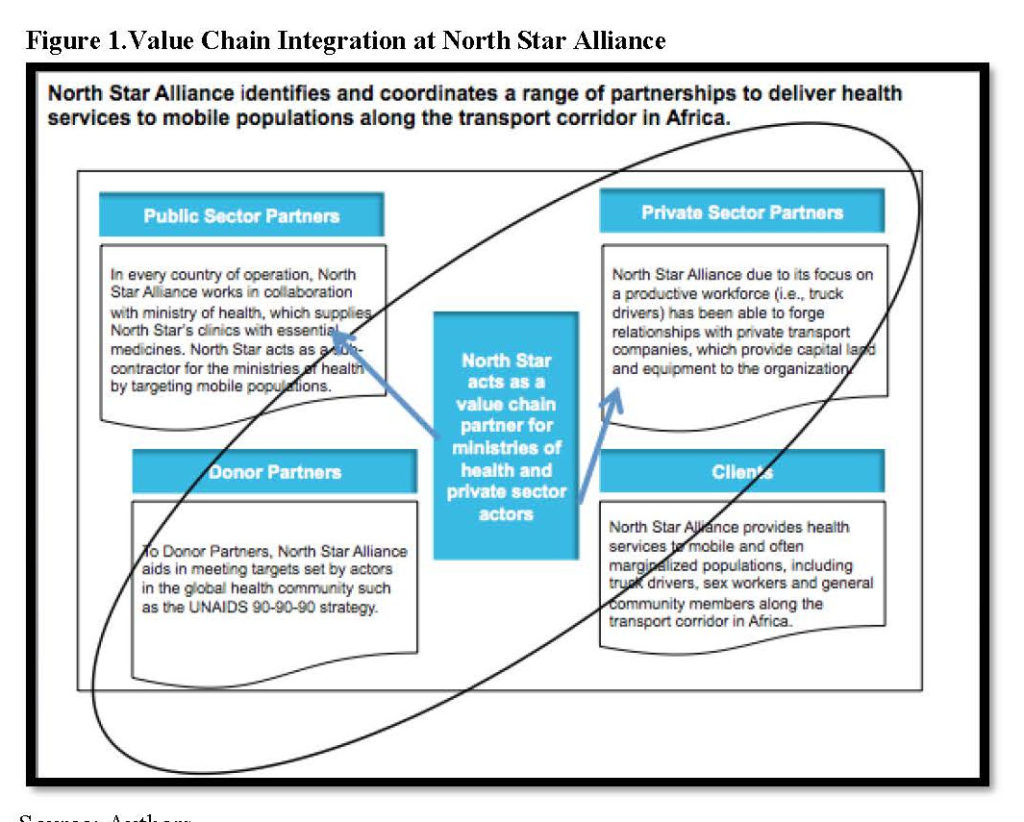
North Star Alliance

North Star Alliance in Sub-Saharan Africa has used value chain partners predominantly in steps one, three, four, six, and seven of the value chain. North Star’s value chain requires that the organization acquire land, set up clinic infrastructure, maintain medical stock supply in order to provide healthcare delivery to truck drivers and sex workers. As a non-profit health services organization, North Star has developed alliances with different types of actors in order to obtain tangible and intangible resources it needs to deliver healthcare to mobile populations along transport corridors in several African countries. When it launched its operations, North Star received significant public support from the humanitarian, government, and private sectors. The impact of the HIV/AIDS crisis on a productive workforce of truck drivers enabled North Star to leverage support from potential allies such as the United Nations World Food Programme (UNWFP) and partners in the commercial sector such as the global courier company TNT Express. These partnerships allowed North Star to obtain the financial resources needed in the first stage of the value chain to establish a network of 36 Roadside Wellness Centres in ten countries.

Health services organizations that can align goals throughout their partnerships often can expand their resource base. In Kenya, as Figure 1 depicts, North Star Alliance has been able to formulate an alliance, along step three of its value chain, to procure free land for all eight of its clinics from the Kenya National Highway Authority (KENHA). While many entrepreneurs bid for the same land, North Star reached an agreement to set up its clinics along the transport corridor and write-off rent – a significant cost.  KENHA, due to its contracts with investment banks, must provide HIV/AIDS services to its contract employees, who are highway construction workers. A manager from KENHA told us that “Because of our agreements with the investment banks, there is a clause that we have to provide HIV services to our workers. We don’t have the capability to do this on our own. We had a hard time finding an NGO that provides HIV services to immigrant workers on contract along the highway. North Star is the only organization we know of. North Star is helping us.”

Unjani Clinics

Unjani Clinics is a social franchise that has established nurse owned and operated clinics for the underserved in South Africa. Unjani is the corporate social responsibility arm of a pharmaceutical company, Imperial Health Sciences. The Unjani Clinic model contributes to strengthening South Africa’s health system and creating employment under the national Black Economic Empowerment (BEE) program. The BEE Codes of Good Practice compel large companies to spend three percent of their net profit to develop small and medium enterprises with a majority black shareholding – two percent for businesses within their corporate supply chain and one percent to help grow other businesses (Gordon Institute of Business Science, 2016). Mutual dependency between Unjani and this South African government initiative in turn helped Imperial Health Sciences position itself to attract government tenders (step one in the value chain) for its core business operations.

Leveraging shared distribution channels

Leveraging shared distribution channels offers a powerful means of benefiting from mutual dependency. Within the value chain, an important stage is setting up infrastructure to establish clinics (step two). Procuring real estate to set up operations can be costly for social enterprises targeting the base of the pyramid. One means through which organizations in our sample have managed to reduce or write-off set-up costs is by leveraging shared distribution channels.

Lifenet International

Lifenet’s conversion franchise model largely dispenses with staffing and focuses on managing existing providers in the healthcare delivery value chain in Burundi, Uganda, and the Democratic Republic of the Congo. Lifenet originally piloted a model in which nurses would do outreach in the communities to deliver primary care. During the pilot phase, Lifenet realized that existing church-run medical centers not only already provided healthcare to Burundi’s rural poor, but also had significant buy-in and trust from the community. Rather than create a parallel system, Lifenet abandoned the nurse-led model and developed a franchise system to bring existing providers into the Lifenet network. This enabled the providers to increase the value of their primary care delivery to the rural poor. Lifenet’s franchise model includes nurse training, management training, growth financing, and pharmaceutical supply.

VisionSpring

VisionSpring partners even more intensively than Lifenet to supply eyeglasses to partners via an existing distribution system’s existing client base in countries throughout the world. In Bangladesh, VisionSpring has leveraged the national distribution capacity of the Bangladesh Rural Advancement Committee (BRAC). VisionSpring uses BRAC’s existing sales force, which includes approximately 80,000 women who sell baskets of health-related goods such as Band-Aids and Aspirin  (Hassey & Kassalow, 2014). By partnering with BRAC, VisionSpring achieved rapid scale and reduced its own training and administrative costs. In South Africa, VisionSpring partnered with Unjani Clinics (Center for Health Market Innovations, 2013). While Unjani’s patients are able to access primary care services at the clinics, vision screening was problematic as the Unjani network did not want to offer the screening without offering clients the ability to purchase the glasses at the point of care. VisionSpring places orders for eyeglasses for its partners and manages all supply chain logistics (VisionSpring, 2013). VisionSpring has found a sustainable specialized position in healthcare delivery and is coordinating a focused piece of the healthcare delivery value chain through extensive partnerships.

These examples illustrate how social enterprises have been able to leverage resources from a range of partners in order to fulfil their core mission of health services delivery at the base of the pyramid. The ability to draw upon existing infrastructure and distribution channels has enabled these social enterprises to significantly reduce their start-up and ongoing costs and simultaneously expand their reach. As the examples illustrate, value chain integration requires health services organizations to be deliberate in reaching disparate types of partners that are needed along stages of their value chains from financing, setting up a clinic, and health service delivery.


Simply creating and managing partnerships is not enough for a successful VCI strategy. In addition, the lead organizations benefit from enabling strategies in the form of developing an efficiency core (Wong, Zlotkin, Ho, & Perumal, 2014) and gaining strength in four key types of management skills.

Enabling Strategy 1: Developing an Efficiency Core

The global health literature highlights standardization and simplicity as necessary ingredients for scaling interventions (Cooley & Kohl, 2006; Simmons, Fajans, & Ghiron, 2009). The notion of the efficiency core refers to the standardized part of a model that can be replicated with minimal modification to fit local contexts (Wong et al., 2014). Each of our cases has an identifiable efficiency core, as Table 1 summarizes.

  • North Star Alliance: North Star has an efficiency core consisting of a blue-box shipping container that provides the office, together with a lean staffing model comprised of five individuals: clinical officer, HIV testing counselor, site coordinator, receptionist, and security guard.
  • Unjani Clinics: Unjani has an efficiency core consisting of a shipping container clinic owned and operated by a nurse from in the local community. Unjani trains nurses in entrepreneurship and business management.
  • VisionSpring: VisionSpring has an efficiency core consisting of Vision Entrepreneurs who use a “Business-in-a-Bag” approach to operate micro franchises, traveling from village to village to conduct vision camps, check eyesight, and sell glasses through door-to-door sales (Hassey & Kassalow, 2014).
  • Riders For Health: Riders’ efficiency core is a fleet management system. The system involves managing health workers’ motorcycles, conducting regular preventive maintenance, and training workers (Business, 2014). Riders developed a replication team that can introduce their system in any country or any project of any size. For example, the team replicated the Riders system in less than two months in Liberia during the Ebola crisis.
  • Jacaranda Health: Jacaranda uses a standardized model targeted on maternity care for its chain of clinics in Kenya.

In addition to creating an efficiency core as part of pursuing a VCI strategy, organizations need strong management capabilities in order to create value for hard-to-reach and last mile populations at the base of the pyramid.

Enabling Strategy 2: Four Types of Management Capabilities

Four types of management capabilities support the VCI strategies in our organizations. The first three categories are supply-side factors: developing financing strategies, driving quality, and investing in strong supply chain management. The fourth category emphasizes the demand-side factor of building strong client relationships. Table 3 offers examples.

Table 3. Four Types of Necessary Management Capabilities
Management capabilities Examples
1.       Supply-side: Developing financing strategies Ubuntu Afya Kiosks: Ubuntu Afya operates medical centers in Kenya that are co-owned by communities organized into cooperative societies. The community groups develop business enterprises that yield income to cross-subsidizes the costs of providing Maternal and Neonatal Health (MNH) services. Examples of income-generating activities include soft drink depots, safe water sales, motorbike taxi services, and mobile money pay stations. The medical centers are run by clinical officers and Community Health Volunteers that have a stake in the enterprise.
2.       Supply-side: Driving quality Penda Health: Penda has developed a system whereby a mystery patient is sent to each Penda clinic every week to identify risks that may undermine the delivery of quality care. A clinic receives one demerit score per identified risk and the goal is to achieve a score under ten per month. While Penda’s clinics are run by nurses the organization has developed a Medical Advisory Board whereby physicians conduct chart review of nurses’ charts. Physicians audit ten per cent of the charts per week; where there are gaps in care, physicians provide support to the nurses to ensure clinical quality.
3.       Supply-side: Investing in strong supply chain management Lifenet: Operating in Burundi, the Democratic Republic of the Congo, and Uganda, management training comprises a key component of Lifenet’s efficiency core. By linking rural partner health centers with local and regional wholesalers, which deliver medicines directly to health centers, Lifenet has removed bottlenecks in the medical supply chain. Prior to launching the program, Lifenet discovered health center nurses were often purchasing medicines themselves: spending days traveling to the capital cities by public transportation in order to buy whatever was in stock at whatever price and quality available, before making the long return journey to their health centers.
4.       Demand-side: Building strong client relationships Operation ASHA: Patient convenience, community mobilization, and comprehensive counselling form core components of Operation ASHA’s offering. By establishing centers where there is significant foot traffic of base-of-the-pyramid consumers, Operation ASHA is able to address many of the critical demand side factors that prohibit lower-income consumers from seeking and adhering to TB treatment, such as transportation and time lost due to travelling to and from clinics.

Supply side: Develop financing strategies

A crucial stage of any value chain is the financing stage, which involves the ability of an organization to fund core operations in a scalable manner (Chandy, Hosono, Kharas, & Linn, 2013). Several of the organizations use fee-for-service models, commonly with consultation fees plus additional fees for medicines and lab services. However, fee-for-service models can face strong challenges. Jacaranda Health, which launched its operations in 2011, runs a fee-for-service model in two maternity clinics in Kenya. The CEO of Jacaranda notes: “Hospitals are high-fixed cost ventures. We still haven’t broken even. We’re almost there and we hope to do so by this December.” Beyond fee-for-service, several organizations use complementary financing models that support free or subsidized services. The following examples focus on the first step of the value chain, where developing a sustainable financing strategy is in integral component of an organization’s value chain.

Penda Health: Fee for service

Penda Health has adopted a fee-for-service model for its chain of primary care clinics in Kenya. Penda’s co-founder notes: “When we first started operations in 2012 it took us years and years to break even. Now if we set up a clinic we can break even in six to eight months.” Penda’s financing strategy involves finding a client base amongst populations that have the ability to pay, such as factory workers and university students.

Penda partners with schools and factories to drive high volumes to their clinics. For example, Penda partnered with the Management University of Africa (MUA) to support a university-sponsored capitated health insurance scheme for students and staff at MUA. The on-campus clinic at MUA caters to 800 students and staff who have employer-sponsored insurance. Penda also partnered with the Masaai Flowers Factory to provide health services to factory workers, using a post-paid model. Under this model, the factory workers do not pay out-of-pocket at the point of service. Instead, Penda invoices Masaai Flowers at the end of each month and the company deducts the healthcare costs from the employees’ pay cheques. Penda is currently expanding its post-paid model to attract other large employers.

Unjani Clinics: Social franchises

In South Africa, Unjani’s fee-based service model enables sustainability and the empowerment of black women through franchised businesses. The ownership model has a built in incentive whereby the professional nurse increases her ownership share annually, based on a franchise agreement with Imperial Health Sciences Limited. The nurse initially pays about US$790 as a commitment fee, which covers the cost of management training in areas such as marketing, standard operating procedures, bookkeeping, record keeping, IT skills, and Unjani systems. When Unjani began in 2010 the nurses were paid a full salary, as Imperial was not convinced the nurses had an appetite for financial risk (Gordon Institute for Health Sciences, 2016). Once the pilot phase was over, however, the model was structured such that as a clinic breaks even, the extra profit becomes the nurse’s salary. Imperial also provides working capital. Each Unjani clinic receives working capital of $900 a month for the first 8 months, then $600 per month for the next 8 months, and finally $300 for the next eight months. The contribution helps the clinic to set up and to build up a client base.

Ziquitza Healthcare Limited: Complementary revenue

Ziquitza Healthcare operates an ambulance service in India. Ziquitza’s business model uses a sliding price scale driven by a patient’s ability to pay, which is determined by the kind of hospital to which patients choose to be taken (public or private). Ziquitiza generates complementary revenue from private hospitals that advertise their services on Ziquitza ambulances (Center for Health Market Innovations, 2016).

Supply side: Drive quality

Driving quality refers to all nine steps of the value chain. As social enterprises expand in size, managers face challenges to maintain quality along each stage. Growth requires robust monitoring to ensure that quality control mechanisms are adhered to by each franchise or clinic.

Penda Health’s eight clinics in Kenya have systematically found ways to compete on quality. Penda has developed a system whereby a mystery patient visits each Penda clinic every week to identify risks that may undermine the delivery of quality care. A clinic receives one demerit score per identified risk – the goal is to achieve under ten demerits per month. Penda’s co-founder told us that “clinics that perform above average are given a bonus.”

In addition, Penda has created a Medical Advisory Board. Physicians who are members of the Medical Advisory Board review nurses’ charts, auditing ten percent of the charts per week. Where there are gaps in care, physicians provide the nurses with advice about clinical quality. Penda’s co-founder reports that where there is clustering of errors in a particular category, the nurses receive refresher training. Penda further surveys its clients to understand whether clients are satisfied with the care they receive at the clinic.           

Supply side: Invest in strong supply chain management

Supply chain management, step six, is a key component of value chain integration. The supply chain is focused on conveying products and services from a beginning point to an end point. Supply chain management involves bulk storage and transportation (Feller, Shunk, & Callarman, 2006).

Healthy Entrepreneurs

Health Entrepreneurs deploys a last-mile distribution model to deliver affordable and reliable health products and services to the poorest families in rural areas. Healthy Entrepreneurs has created its own end-to-end distribution chains. Through a network of trained micro-entrepreneurs who operate pharmacies and health facilities, the organization manages an end-to-end value chain of reliable products and practical health information. In order to prevent stock outs, Healthy Entrepreneurs delivers products directly to the entrepreneurs via local depots (Center for Health Market Innovations, 2016).

Lifenet International

By linking rural partner health centers with local and regional wholesalers that deliver medicines directly to the centers, Lifenet has removed bottlenecks in the medical supply chain. Prior to launching the program, nurses were often purchasing medicines themselves: spending days traveling to cities by public transportation in order to buy whatever was in stock at whatever price and quality available, before making the long return journey to their health centers. By developing supplier relationships with local and regional wholesalers, Lifenet’s health centers avoid stock-outs, manage debt, and are financially viable, ensuring their sustainability.

Demand side: Build strong client relationships

While healthcare organizations face temptations to focus on supply side factors, the last stage of a social enterprises’ value chain is often the delivery of a healthcare service. Research reveals that simply providing a needed health service often is not enough (Wong et al., 2014). Koh, Hedge, & Karamchandani (2014) note that some markets offer “pull” products, which most target customers readily demand, such as microfinance loans to credit-starved households at much lower interest rates than money lenders.

In contrast, health is commonly a “push” product. Consumers “do not readily perceive the need for these [push] products as they are unaware of the problem, solution, or both. Often, even if they are aware of the problem, they are unable to easily try out the new solution to understand its value proposition, leading them to make do with established, inferior solutions” (Koh et al., 2014: 23). For social enterprises providing health services to lower-income populations, addressing the last stage of the value chain, which centers on the demand side, is key to driving scale and viability.

North Star

While North Star establishes its container clinics along the transport corridor, interviews with managers, clinic staff, and clients revealed that despite the proximity of the clinics to the truck-stop parking lots, it was often difficult for drivers to leave their trucks in order to seek care. A truck driver parked at the border of Kenya and Tanzania told us: “If my turn boy [assistant] is not here and I leave, in 15 minutes some of my fuel is taken and cargo stolen.” Another truck driver told us: “We are tracked by GPS by our companies. If I go off one road, we get a call from the company.”

Recognizing the difficulty for truck drivers to access its clinics, North Star developed an outreach strategy. Each week, HIV testing counsellors visit truck drivers during their breaks or while they park overnight at a border crossing. A HIV testing counsellor in Salgaa, Kenya notes: “most of the time we need to do outreach and do HIV tests in the truck drivers’ cabins. Most of them will not come to the clinic.” North Star notes that its clinic teams along the transportation corridors must conduct regular behaviour change and communication sessions in nearby communities in order to meet their target volumes, typically aiming for 25-30 clients per day per clinic.

Operation ASHA

By establishing tuberculosis clinics where there is significant foot traffic by base of the pyramid consumers, Operation ASHA address many of the critical demand side factors that prohibit people from seeking and adhering to TB treatment, such as transportation and time travelling to and from clinics. Patient convenience, community mobilization, and comprehensive counselling form core elements of Operation ASHA’s services (Center for Health Market Innovations, 2016). Providing convenience for customers in accessing TB treatment is a crucial aspect of Operation ASHA’s model given that promoting adherence to TB is often challenging (Makanjuola, Taddese and Booth, 2016).

These two examples highlight the point that, for social enterprises targeting lower-income consumers, it is often necessary to adjust offering to meet patient demand in order to achieve goals of the last stage of the value chain, which focuses on the delivery of a health product or service. The Operation Asha example illustrates how adapting services to the needs and interests of local populations is critical for scaling success. The North Star case emphasizes that targeting different types of mobile populations from truck drivers and sex workers requires understanding local realities and constraints.

Despite the successes, health services organizations also face major issues with VCI strategies. Below we discuss cases from our sample in which organizations confronted scaling challenges.

Pitfalls in Value Chain Integration

Failure to create effective partnerships for key resources can constrain an organization’s expansion goals.

Penda Health

In Kenya, Penda sought to expand its presence in Machakos, near Nairobi. While factories in the area were keen to have Penda offer its services to their employees, the partnerships fell through because Penda could not find an appropriate location for a clinic. Penda told us: “…we thought we had secured the perfect location for partnering with many of the factories in that area, but illegal actions by the landlords there caught us off-guard and, after a protracted struggle, we withdrew from this location.” Penda further noted: “We learned that finding a location, is very, very hard, so you should start with a location and then find the community partners nearby. Or, have the community partner give you space.” This example illustrates how external actors can undermine expansion efforts. Penda secured a partnership to attract a paying clientele, but was unable to realize the gains from this partnership because it could not identify partners at another stage of its value chain, procuring real estate.

North Star

Attracting paying clients forms a key value chain stage for most of our cases. In Kenya, North Star Alliance learned it is not always possible to exploit revenue-generating opportunities due to scale barriers that lie outside the boundaries of the organization. North Star has developed partnerships with several transport companies, many of which were willing to provide contracts for North Star to conduct annual medical check-ups for their long-haul truck drivers. A manager from Roy Hauliers, which manages a fleet of 250 long-haul truck drivers, told us: “we wanted to give North Star this business so they could do the medical check-ups of our drivers.” North Star was keen to take advantage of the opportunity. However, its clinics are staffed by clinical officers or nurses, but the Ministry of Health guidelines stipulated that check-ups require a doctor. The inability to manage regulatory barriers in North Star’s ecosystem limited its ability to create an alternative revenue stream.

Conclusion

This study offers suggestive analysis of how private sector ventures that target the base of the pyramid in health services delivery use value chain integration strategy. We argue that adopting VCI strategy combined with enabling strategies of an efficiency core and four types of management capabilities helps social enterprises increase their scale.

The ability of health services organizations to draw resources from disparate partnerships with government and private sector actors along different stages of their value chains is central to scaling success. Partnerships along a venture’s value chain are critical precisely because many of the scale barriers lie outside the boundaries of social enterprises. Our research emphasizes why VCI strategy and the enabling strategies of efficiency core and management skills matter for scaling health services delivery to the base of the pyramid.

The study has limitations that require additional research. Our sample is relevant, but small. We omit some value chain partnerships that we were not able to derive from published data and interviews.  Further research comparing organizations that adopted a VCI strategy to those that did not would yield valuable insights. Moreover, inquiry is needed on how social enterprises coordinate their value chain partnerships.

The study offers insights on how social enterprises pursue value chain integration. By using VCI strategy as a practical framework, our research illustrates how and why the broader ecosystem matters for scaling success. The core point is that partners not directly involved in an organization’s core mission can advance or thwart long term success. Hence, global health organizations need to pay close attention to value chain integration strategy and its enabling activities.


References

  1. Acumen Fund. Ziquitza Healthcare Limited. https://www.healthyentrepreneurs.nl/our-concept/. Accessed August 10, 2017.
  2. Adner R. Match your innovation strategy to your innovation ecosystem. Harvard Business Review. 2006;84(4):98-107;148.
  3. Bhattacharyya O, Khor S, McGahan A, Dunne D, Daar A, Singer P. Innovative health services delivery models in low-and-middle-income countries: what can we learn from the private sector? Health Research Policy and Systems. 2010;8(24):1-11.
  4. Stanford Graduate School of Business. Riders for Health: Prospective Trial Results from Southern Province Zambia. https://www.gsb.stanford.edu/sites/gsb/files/files-fpp/22766/research-briefing-riders-for-health.pdf. Published October 2014. Accessed January 15, 2018.
  5. Capron L, Mitchell W. (2013). Build, borrow, or buy: Solving the growth dilemma: Boston, MA; Harvard Business Press: 2012.
  6. Chandy L, Hosono A, Kharas H, Linn J. Getting to scale: how to bring development solutions to millions of poor people. Washington, D.C.; Brookings Institution Press: 2013.
  7. Cooley L, Kohl R. Management Systems International. Scaling up from vision to large scale change: a management framework for practitioners. http://www.msiworldwide.com/wp-content/uploads/MSI-Scaling-Up-Framework-2nd-Edition.pdf. 2012.
  8. Feller A, Shunk D, Callarman T. Value chains versus supply chains. http://www.stephbti.ac.in/notes/33171-value-chain-vs-supply-chain.pdf. BPTrends. March 2006.
  9. Hassey K, Kassalow JS. Stanford Social Innovation Review. VisionSpring Aims to Provide Eyeglasses to Millions. Stanford Social Innovation Review. https://ssir.org/articles/entry/visionspring_aims_to_provide_eyeglasses_to_millions. Published May 29, 2014. Accessed January 1, 2018.
  10. Healthy Entrepreneurs. Our Concept. https://www.healthyentrepreneurs.nl/our-concept/. Accessed October 16, 2017.
  11. Healthy Entrepreneurs. Healthy Entrepreneurs. http://healthmarketinnovations.org/program/healthy-entrepreneurs. Accessed on October 20, 2017.
  12. Health Innovations. 3 Lessons from Partnering with Factories in Kenya. http://www.pendahealth.com/index.php/component/easyblog/entry/3-lessons-from-partnering-with-factories-in-kenya?Itemid=435. Accessed July 15, 2017.
  13. Jacaranda Health. Jacaranda’s Model.https://jacarandahealth.org/maternity-in-east-africa/jacarandas-model/. Accessed on July 10, 2017.
  14. Kim JY, Farmer P, and Porter ME. Redefining global health-care delivery. Lancet. 2013;382:1060-1069.
  15. Koh H, Hedge N, Karamchandani A. The Rockefeller Foundation. Beyond the Pioneer: Getting Inclusive Industries to Scale. https://assets.rockefellerfoundation.org/app/uploads/20140508153451/Beyond-the-Pioneer-Report.pdf. Published April 2014. Accessed Janaury 1, 2018.
  16. Kramer MR, Pfitzer MW. The ecosystem of shared value. Harvard Business Review. 2016;94(10):80-89.
  17. Lifenet International. The Model. http://www.lninternational.org/what-we-do/model/. Accessed from July 10, 2017.
  18. Makanjuola T, Taddese HB, Booth A. Factors Associated with Adherence to Treatment with Isoniazid for the Prevention of Tuberculosis amongst People Living with HIV/AIDS: A Systematic Review of Qualitative Data. PLoS One. 2014;9(2): e87166.
  19. Mangham LJ, Hanson K. Scaling up in international health: what are the key issues? Health Policy and Planning. 2010;25(2):85-96.
  20. Mitchell W. Why Apple’s product magic continues to amaze–skills of the world’s# 1 value chain integrator. Strategy & Leadership. 2014;42(6):17-28.
  21. Operation Asha. Tubercolosis. http://www.opasha.org/our-work/our-operation/. Accessed July 13, 2017.
  22. Porter ME. Competitive advantage: creating and sustaining superior performance. New York, NY: FreePress; 1985.
  23. Porter ME, Teisberg EO. Redefining health care: creating value-based competition on results. Boston, MA: Harvard Business School Press; 2006.
  24. Simmons R, Fajans P, Ghiron L (Eds.). Scaling up health services delivery: from pilot innovations to policies and programmes. Geneva: World Health Organization; 2009.
  25. Sutherland M, Krige K. .Unjani “clinics in a container”: social franchising in South Africa. Emerald Emerging Markets Case Studies. 2017. https://doi.org/10.1108/EEMCS-06-2016-0151.
  26. Unjani Clinics. Unjani Clincs. http://healthmarketinnovations.org/program/unjani-clinics. Accessed September 20, 2017.
  27. VisionSpring. VisionSpring’s Distribution Channels. http://visionspring.org/distribution-channels/. Accessed September 13, 2017.
  28. Wong J, Zlotkin S, Ho C, Perumal N. Stanford Social Innovation Review. Replicating Parts, not the Whole to Scale. Stanford Social Innovation Review. https://ssir.org/articles/entry/replicating_parts_not_the_whole_to_scale. Published August 7, 2014. Accessed January 1, 2018.
  29. Yamey G. What are the barriers to scaling up health interventions in low and middle income countries? A qualitative study of academic leaders in implementation science. Globalization and Health. 2012;8(11).

Websites

  1. Acumen Fund. (2017, August 10). Ziquitza Healthcare Limited. Retrieved from: https://www.healthyentrepreneurs.nl/our-concept/
  2. Healthy Entrepreneurs. (2017, October 16). Our Concept. Retrieved from: https://www.healthyentrepreneurs.nl/our-concept/
  3. Health Entrepreneurs. (2017, October 20). Healthy Entrepreneurs. Retrieved from: http://healthmarketinnovations.org/program/healthy-entrepreneurs
  4. Health Innovations. (2017, July 15). 3 Lessons from Partnering with Factories in Kenya. Retrieved from: http://www.pendahealth.com/index.php/component/easyblog/entry/3-lessons-from-partnering-with-factories-in-kenya?Itemid=435
  5. Jacaranda Health. (2017, July 10). Jacaranda’s Model. Retrieved from: https://jacarandahealth.org/maternity-in-east-africa/jacarandas-model/
  6. Lifenet International. (2017, July 10). The Model. Retrieved from: http://www.lninternational.org/what-we-do/model/
  7. Operation Asha. (2017, July 13). Tubercolosis. Retrieved from: http://www.opasha.org/our-work/our-operation/
  8. Unjani Clinics. (2017, September 20). Unjani Clincs. Retreived from: http://healthmarketinnovations.org/program/unjani-clinics
  9. VisionSpring. (2017, September 13). VisionSpring’s Distribution Channels. Retrieved from: http://visionspring.org/distribution-channels/


Technological Innovations for Aging Populations: What Are the Opportunities for Learning across Low- and High-Income Countries?

Onil Bhattacharyya and Kathryn Mossman, University of Toronto

Contact: Onil Bhattacharyya, onil.bhattacharyya@wchospital.ca

Abstract

What is the message?

The rapid growth in aging populations is a challenge faced by both high-income countries (HICs) and low- and middle-income countries (LMICs). This study offers examples of ways that HICs and LMICs can learn from each other, especially in the areas of technology and service design. LMICs, in particular, should focus on leveraging tools that are patient facing and facilitate self-management, monitoring, and care planning to address the needs of an aging population.

What is the evidence?

Review of programs documented by the Center for Healthcare Management Innovation.
Submitted: December 24, 2017. Accepted after review: March 6, 2018

Cite as: Onil Bhattacharyya, Kathryn Mossman. 2018. Technological innovations for aging populations: What are the opportunities for learning across low- and high-income countries? Health Management Policy and Innovation, Volume 3, Issue 1.

Introduction

Aging populations challenge current models of health service delivery, presenting an opportunity to enhance health systems in low- and middle-income countries (LMICs) and high-income countries (HICs). The number of people 65 years of age or older will triple by 2050, with most of the increase realized in developing countries.1. This growth will be accompanied by a rise in complex chronic conditions, which require strong self-management and coordination between different levels of care to achieve good outcomes.2–4 An increase in complex chronic conditions has been associated with a rise in costs historically; however leveraging technologies to redesign health services has the potential to offset increased costs, and provides an opportunity for LMICs and HICs to learn from each other as they experiment with different approaches to provide affordable care.5

What can LMICs learn from HICs?

HICs have shown that key features of care models for aging populations with complex needs include careful targeting of patients most likely to benefit; comprehensive assessment of patient needs; care planning and remote monitoring; supporting self-care by patients and families; and coordination of care between providers and families.6 LMIC health systems can learn from HICs by devising low-cost models of care that incorporate these key features, emphasizing the development of patient-facing technologies that enable these functions,7–9 rather than expensive electronic medical records built for administrative purposes.10 The dearth of medical staff and training programs in care of the elderly in these settings suggests that self-management is a more feasible approach to improving care.

What can HICs learn from LMICs?

The mix of resource constraints, poor performance of existing systems, and a lack of regulation that characterizes LMICs can inspire novel approaches that can be instructive for HICs,5 including innovations for elderly populations.11 However, organizations in LMICs are in the early stages of developing innovations focused on the elderly, as shown by a search of the Center for Health Market Innovations (CHMI) database. The CHMI online resource, which catalogues over 1300 innovative programs in LMICs, shows only 35 health programs targeting the elderly.12

Despite the low numbers, several key features stand out, particularly in the use of information and communications technology (ICT). Among the CHMI example, 12 use ICTs, often for remote consultations involving online video, phone, or text communications. For example, DoctorFromHome is a program based in India that provides patients with online video consultations with doctors and specialists 24/7 using a web-based platform compatible with desktops, laptops, and mobile devices. Both patients and medical providers can sign up to use this tool, making it easier to add new users and new types of services than if they were based in a specific hospital or clinic.13

In another example, Caring Palms Health Care in Nigeria developed a mobile application and website patients can use to schedule medical appointments and home visits, and upload prescriptions for home delivery. They have also designed a subscription plan specifically for the elderly.14

Another program, Agewell Global, uses ICTs and a peer support network to monitor health outcomes to support the elderly in their homes. Elderly companions visit seniors in their homes and are trained to use the Agewell mobile screening tool to collect information on health and wellbeing. The tool’s algorithms will review collected data, which triggers tailored referral recommendations for medical and social services.15 A pilot of the program took place in South Africa in 2014 and several additional pilots have launched in the US and Ireland, suggesting that this technology can be deployed in a wide range of contexts.16 While these approaches are promising, there is much more to be done to address the needs of a rapidly growing global population.

How can technology help redesign health services for the elderly?

There are many new patient- facing technologies, but few target the specific needs of the elderly in either high-income or low-income contexts.17 High rates of concurrent health conditions4 and progressive physical and cognitive decline should be considered in the design of digital tools for this group.18

A recent study explored the needs of frail elderly and their caregivers that could be addressed by a digital health advisor.19,20  Four key needs emerged, including the need to manage day-to-day tasks; preserve dignity and connections while adjusting to changes in health status; access accurate and easy-to-understand information on their health; and feel understood by their healthcare providers, family, and friends. Participants suggested features such as a metrics dashboard that collects and displays information on symptoms and signs, tools to connect patients remotely to medical practitioners, a care journal, and a shared calendar and task manager to facilitate coordination between patients and their care team.

A similar study for LMICs could highlight a different set of constraints for the frail elderly, but the desire for dignity, connection, and autonomy is common and not actively supported in most care settings. Digital tools that are inexpensive, durable, use voice and visual interfaces for those with low literacy, and support self-care and engage caregivers are likely to have huge benefit in low resource settings.

Many of the necessary features have been developed, but are found across a range of different tools that only address a subset of a person’s needs.17 Technological innovations in HICs include a mobile device to improve primary health care for patients with complex chronic disease and disabilities,9 a fall-detection sensor for older adults that is linked to a smartphone application,21 and a tablet-based tool for waiting rooms that enables complex patients to set priorities for their primary care visit.22 In LMICs, the Chinese Aged Diabetic Assistant is a smartphone application that helps older adults with diabetes self-management, self-monitoring and health education.23 The majority of chronic disease apps are downloadable for free, so cost may not be a major barrier going forward.17

Conclusion

Technological innovations provide an opportunity to tailor services to an elderly person’s unique pathophysiology, their social circumstances, and their preferences. They can help manage complex information to support decisions by patients, caregivers, and providers. HICs have provided large subsidies to purchase expensive digital solutions to support administrative functions in large institutions, and are only now adapting them to meet the needs of providers and patients.24,25

LMICs can skip this phase and support either the development or distribution of digital tools to support patients and caregivers first, and then link them with providers. New models of care could emerge that leverage communities and families more extensively, since the social determinants of health and independence in the elderly extend well beyond health services.26 Digitally enhanced services should prioritize what makes life worth living, facilitate communication with providers, and provide decision-support for people who either cannot access or afford specialized services. The technical capability exists, and tools could be built affordably; however governments will need to support the new models of care delivery that are needed to integrate an elderly person’s system of health with the broader health system.

References

  1. World Health Organization. Global Health and Aging.
  2. Schäfer I, Hansen H, Schön G, Höfels S, Altiner A, Dahlhaus A, et al. The influence of age, gender and socio-economic status on multimorbidity patterns in primary care. first results from the multicare cohort study. BioMed Central Health Services Research. 2012;12(1):89.
  3. Uijen AA, Lisdonk EH. Multimorbidity in primary care: prevalence and trend over the last 20 years. European Journal of General Practice. 2008;14(Suppl 1):28-32.
  4. Koné Pefoyo AJ, Bronskill SE, Gruneir A, Calzavara A, Thavorn K, Petrosyan Y, et al. The increasing burden and complexity of multimorbidity. BioMed Central Public Health. 2015;15(1):415.
  5. Bhattacharyya O, Wu D, Mossman K, Hayden L, Gill P, et al. Criteria to assess potential reverse innovations: Opportunities for shared learning between high- and low-income countries. Globalization and Health. 2017;13(4).
  6. McCarthy D, Ryan J, Klein S. Models of Care for High-Need, High-Cost Patients: An Evidence Synthesis. Issue Brief. The Commonwealth Fund. http://www.commonwealthfund.org/publications/issue-briefs/2015/oct/care-high-need-high-cost-patients. Published October 29, 2015. Accessed September 15, 2017.
  7. Hong CS, Siegel AL, Ferris TG. Caring for high-need, high-cost patients: what makes for a successful care management program? Issue Brief. The Commonwealth Fund.
  8. Bickmore TW, Pfeifer LM, Byron D, Forsythe S, Henault LE, Jack BW, et al. Usability of Conversational Agents by Patients with Inadequate Health Literacy: Evidence from Two Clinical Trials. Journal of Health Communication. 2010;15(sup2):197-210.
  9. Steele Gray C, Khan AI, Kuluski K, McKillop I, Sharpe S, Bierman AS, et al. Improving Patient Experience and Primary Care Quality for Patients With Complex Chronic Disease Using the Electronic Patient-Reported Outcomes Tool: Adopting Qualitative Methods Into a User-Centered Design Approach. Journal of Medical Internet Research Research Protocols. 2016;5(1):e28.
  10. Qiang CZ, Hausman V, Yamamichi M, Miller R. Mobile Applications for the Health Sector. Washington, D.C.: World Bank. http://documents.worldbank.org/curated/en/751411468157784302/Mobile-applications-for-the-health-sector. Published September 17, 2012. Accessed September 15, 2017.
  11. Rosenberg P, Ross A, Garcon L. Report of the First WHO Global Forum on Innovations for Ageing Populations. Geneva: World Health Organization. http://www.who.int/kobe_centre/publications/GFIAP_report.pdf. Published December 2013. Accessed September 15, 2017.
  12. CHMI. Center for Health Market Innovations. 2017. healthmarketinnovations.org. Accessed October 10, 2017.
  13. CHMI. DoctorFromHome. 2017. http://healthmarketinnovations.org/program/doctor-home-india. Accessed October 23, 2017.
  14. CHMI. Caring palms health care. 2017. http://healthmarketinnovations.org/program/caring-palms-health-care. Accessed October 10, 2017.
  15. CHMI. Agewell Global. 2017. http://healthmarketinnovations.org/program/agewell-global. Accessed October 10, 2017.
  16. Agewell Global. Agewell Global. www.agewellglobal.com. Accessed October 10, 2017.
  17. Singh K, Drouin K, Newmark LP, Lee J, Faxvaag A, Rozenblum R, et al. Many Mobile Health Apps Target High-Need, High-Cost Populations, But Gaps Remain. Health Affairs. 2016;35(12):2310-2318.
  18. Pan S, Jordan-Marsh M. Internet use intention and adoption among Chinese older adults: From the expanded technology acceptance model perspective. Computers in Human Behaviour. 2010;26(5):1111-1119.
  19. Shah A, Gustafsson L, Bhattacharyya O, Schneider EC. How a Digital Health Advisor Could Help High-Need, High-Cost Patients and Their Caregivers. To the Point. New York: The Commonwealth Fund. http://www.commonwealthfund.org/publications/blog/2016/dec/digital-health-advisor. Published December 1, 2016. Accessed September 15, 2017.
  20. Bhattacharyya O, Shah A, Schneider E, Kang S. Developing a Digital Health Advisor for High-Need, High-Cost Patients. In: AcademyHealth Annual Research Meeting. Academy Health. Published August 24, 2017. Accessed September 15, 2017.
  21. Thilo FJ, Bilger S, Halfens RJ, Schols JM, Hahn S. Involvement of the end user: exploration of older people’s needs and preferences for a wearable fall detection device – a qualitative descriptive study. Patient Preference and Adherence. 2017;11:11-22.
  22. Lyles CR, Altschuler A, Chawla N, Kowalski C, McQuillan D, Bayliss E, et al. User-Centered Design of a Tablet Waiting Room Tool for Complex Patients to Prioritize Discussion Topics for Primary Care Visits. Journal of Medical Internet Research mHealth and uHealth. 2016;4(3):e108.
  23. LeRouge C, Ma J, Sneha S, Tolle K. User profiles and personas in the design and development of consumer health technologies. Internatonal Journal Medical Informatics. 2013;82(11):e251-e268.
  24. Blumenthal D. Implementation of the Federal Health Information Technology Initiative. New England Journal of Medicine. 2011;365(25):2426-2431.
  25. Sheikh A, Cornford T, Barber N, et al. Implementation and adoption of nationwide electronic health records in secondary care in England: final qualitative results from prospective national evaluation in "early adopter" hospitals. British Medical Journal. 2011;343:d6054. doi:10.1136/BMJ.D6054.
  26. Vassilev I, Rogers A, Sanders C, Kennedy A, Blickem C, Protheroe J, et al. Social networks, social capital and chronic illness self-management: a realist review. Chronic Illness. 2011;7(1):60-86.

Improving the Management Skills of Primary Healthcare Leaders: The “Mid-Level Management Training” Program in Nigeria

Nora Brown, MA, USAID; Sandra Dratler, DrPH, University of California, Berkeley; Muhammad Pate, MD, Duke University; Kristiana Raube, PhD, University of California, Berkeley; Will Mitchell, PhD, University of Toronto

Contact: William Mitchell, william.mitchell@Rotman.Utoronto.Ca

Abstract

What is the message?

This article describes the Mid-Level Management Training (MLMT) program in Nigeria, which provided ten months of health management training to about 100 clinical and administrative leaders in the Nigeria public primary healthcare sector from December 2009 through October 2010.

  • The MLMT was organized by the National Primary Health Care Development Agency (NPHCDA) of Nigeria, with technical support from Duke University, the University of California at Berkeley, and the Global Business School Network in the U.S. Participants from 36 of Nigeria’s states and Federal Capital Territory undertook a series of six week-long residencies in Abuja, the capital of Nigeria.
  • The summary evaluation of the program is that the curriculum identified relevant topics and that participants gained knowledge and confidence in the topics; moreover, the largest improvements occurred in a complex problem-solving exercise based on practical applications, which is arguably the most relevant evaluation.

What is the evidence?

Experience of the authors with the program, plus detailed program evaluations.

Links: Appendix A (curriculum philosophy) | Appendix B (curriculum detail)

Submitted: June 1, 2017; accepted after review, August 29, 2017.

Cite as: Nora Brown, Sandra Dratler, Muhammad Pate, Kristiana Raube, and Will Mitchell. 2017. Improving the Management Skills of Primary Healthcare Leaders: The “Mid-Level Management Training” Program in Nigeria. Health Management Policy and Innovation, Volume 2, Issue 2.

Introduction: The MLMT

In December 2009, eighty-four mid-level managers from primary healthcare facilities across Nigeria had thirty minutes to complete a problem-solving exercise:

Assume that as a manager in a primary healthcare organization, you have been asked to come up with a plan to help your organization achieve an important element within one of the Millennium Development Goals by 2015. Using the data below, choose one area of focus for your plan:

[targets: (1) reduce child mortality; (2) reduce under-five mortality; (3) increase percentage of one-year-olds fully immunized; (4) reduce maternal mortality; (5) increase attended deliveries; (6) reverse the spread of HIV/AIDS; (7) reverse the spread of malaria]

In the next 30 minutes, outline a plan (using bullet points) using management approaches to achieve a MDG of your choosing. The management approaches may include skills such as statistics, computer applications, communication, strategy, financing, leadership techniques, client orientation, and monitoring & evaluation. Remember to focus on strategies that you as a manager can affect.”

Based on criteria from healthcare leaders and business faculty from the U.S. and Nigeria, the participants achieved a mean score of 32/100, ranging from 5 to 60. Clearly, there was room for improvement.

The test-takers were about to participate in the inaugural offering of the Mid-Level Management Training (MLMT) program, sponsored by the National Primary Health Care Development Agency (NPHCDA) of Nigeria. The MLMT would last until October 2010; the program included six week-long residencies held in the national capital, Abuja, plus inter-session projects.

The MLMT has a simple and powerful goal: To improve management skills so that public primary healthcare facilities can provide better services. With 170 million people, Nigeria is the most populous country in Africa. Health outcomes in the country are improving, particularly with increased emphasis on strengthening primary healthcare services; from 1990 to 2009–2010, life expectancy increased from 48 years to 54 years, while infant mortality during the first year of life decreased from 126 to 88 per 1,000 births.[1] Despite these gains, Nigeria has a long way to go to reach its Millennium Development Goals. The initial problem-solving exercise suggested that participants had opportunities improve their management skills and, in turn, help their facilities improve healthcare.

The World Bank’s 1999 report, Better Health for Africa (2), suggested that achieving better health is often constrained by poor management of health services. Limited but growing evidence from the gray literature of on-site reports and a small body of academic studies is beginning to document health management education programs (3–13). Reports suggest that most management education for health facility workers in low- and middle-income countries involves short courses. In parallel, there is growing interest in longer programs that are beginning to be developed at business and public health schools in Kenya, South Africa, Uganda, and elsewhere, sometimes with initial assistance from foreign universities. The MLMT program, sponsored by the NPHCDA, was designed to provide extended management education for middle-level managers in government-run healthcare facilities in Nigeria.

The NPHCDA is a parastatal agency linked to Nigeria’s Federal Ministry of Health, supporting more than 1,000 primary healthcare facilities (http://nphcda.org/index.php/history). The NPHCDA manages programs for vaccination, midwifery training, and other services (14). The agency views management training as a critical complement to its clinical services.

The MLMT was initiated by the CEO of the NPHCDA, Dr. Muhammad Pate (Dr. Pate later served as Minister for State for Health in Nigeria), together with agency staff members under the leadership of Dr. David Malgwi. Planning for the MLMT by staff members of the NPHCDA and faculty from a Duke University in the U.S., where Dr. Pate earned an MBA degree, began in 2009. The Health Sector Management program at Duke University’s Fuqua School of Business provided technical assistance for the inaugural MLMT.

Format and Participants

Curriculum

The MLMT teaches basic skills of general management and health policy, based on an approach of “contextualization in the classroom.” The format combines skills and experience of “content experts” who have knowledge of general management and health policy issues, together with “context experts” with relevant health sector experience.

The MLMT curriculum covered principles in twelve topics. The topics included epidemiology/statistics, leadership, financial management, communications, strategic planning, health economics, national healthcare policies, supply chain and logistics, quality of care, computer skills, and information systems. These topics encompass key elements of leadership and analysis.

Faculty from local institutions with experience teaching relevant concepts served as what the program referred to as content experts. These institutions included business and public health schools, plus Nigeria’s Center for Management Development. The faculty members were recruited via contacts of the NPHCDA.

Officials of the NPHCDA and several government agencies with relevant experience in practice served as what the program referred to as context experts. NPHCDA staff members have led vaccination, midwifery training, and other programs; this experience helped link management principles to participants’ experience. The NPHCDA also has extensive public- and private-sector contact, which helped identify other context experts.

The content and context experts worked together to plan and deliver sessions. Sessions, which usually lasted ninety minutes, typically included presentation of core principles by the content expert, examples of their use by the context expert, and ongoing discussion with the participants about their experience. Most sessions were followed by “skills stations” in which small groups of participants applied material from the sessions.

The six residencies, each lasting a week, contained subsets of the twelve core topics threaded together through the program. The threading reinforced topical interdependence. The appendices describe the program format in some detail.

Each participant applied the skills to an ongoing project at her or his facility between the sessions. Projects included improving data collection, expanding immunization and maternal and child health programs, conducting computer training in their organizations, and other topics. Participants provided updates and presentations about their work at the beginning of each session. Staff members from the NPHCDA reviewed the presentations and reports.

The program required substantial financial commitment. Core funding from the Head of the Civil Service of the Federation supported faculty stipends, program infrastructure (rental for training space and lodging, meals, and travel for participants), materials, and other expenses. The Bill and Melinda Gates Foundation supported international travel, materials development, and program evaluation. Duke’s Health Sector Management program supported initial travel costs.

Participants

Healthcare officials in each of Nigeria’s 36 states plus the FCT nominated five participants. The NPHCDA then invited three participants from each jurisdiction, basing choices on responsibilities, span of control, and education. Participants received invitations in early December for a program that would begin ten days later. Despite the short notice, 84 of the 121 invited participants joined the first session, with another 19 joining during the second session in February 2010 (people who joined in February came early for a two-day catch-up workshop). Of the 103 participants (55 men and 48 women), 96 remained through the final exam.

Participants had varied positions and responsibilities. The largest cohorts were healthcare administrators (32%), community health workers (27%), registered nurses (17%), and physicians (17%). Participants were responsible for community health education, maternal and child healthcare, immunization, communicable and non-communicable diseases, and other functions; more than half of the participants had at least two responsibilities (indeed, 17% reported responsibilities for “all PHC areas”). Most participants had substantial experience in their organizations (16.8 years mean) and current positions (5.0 years), with an average of 52 direct reports.

Evaluation: Relevance and Learning

The Global Business School Network (http://www.gbsnonline.org/) and two faculty members from the University of California Berkeley conducted five sets of within-subject evaluations.

Relevance and program evaluation

At the beginning of the program, participants indicated the frequency of use during the past three months (rarely, sometimes, often, always) of epidemiology, leadership, financial management, communications/presentations, and strategic planning. More than 50 percent of the individual participants used four of the five skills at least “often,” while epidemiology reached often-level use for just under 50 percent of individuals and more than 50 percent for their organizations. Hence, each area was relevant.

At the end of the program, the participants evaluated the quality of the MLMT. Scores reached 4.1/5 for instruction and assignments, 4.2 for participants, 4.4 for content, and 4.6 for relevance. Despite noting opportunities to improve, participants rated each aspect well.

Topical knowledge

Pre- and post-material evaluations focused on six subjects. The evaluation team used materials from the instructors and the team members’ knowledge of the topic to develop the tests. Each test included five to ten questions. Participants completed the post-assessments after the second session of each topic.

Scores improved in five topics (Table 1). Substantial gains occurred in epidemiology and health economics, which had the lowest bases (epidemiology: 48% to 65%; health economics: 51% to 60%). Strategic planning increased from 72% to 79%. The participants began with higher levels for leadership and communications, reflecting high use of these skills within their positions, yet still improved (leadership: 83% to 94%; communications: 81% to 88%). All five scores increased significantly (p<0.01, paired sample t-tests).

Table 1. Pre- and post-instruction tests of topical knowledge

All five scores increased significantly (p<0.01, paired sample t-tests)


By contrast, financial management had little improvement after the second session (57% to 58%). The result for this topic may reflect initial choices of faculty, who had some difficulty connecting with the participants. After observing these results at a mid-point of the MLMT, the curriculum added a supplemental financial management class during the final session.

Confidence and empowerment

Before and after receiving instruction, participants reported their confidence in using six topics. Epidemiology, which had the lowest pre-instruction confidence, produced the greatest increase, from 3.4 to 4.3. For financial management, despite the relatively low test scores, confidence grew from 3.5 to 4.2. Participants indicated relatively high confidence initial levels in leadership, communications, and strategic planning; even these areas showed increased confidence by the end of the program (each moving from 3.9 to at least 4.1). Mean confidence in all six comparisons increased significantly (p<0.01; paired sample t-tests).

Pre- and post-program evaluations also found increased leadership empowerment, including making decisions and bringing about change. Average responses for empowerment to make decisions in participants’ current positions rose from 3.6 to 4.5; perceived ability to bring about change rose from 4.0 to 4.4 (both p<0.01; paired sample t-tests). Importantly, for both questions, the lower tails of the distributions rose substantially. More than a third of participants reported scores below 4 in the pre-program reports; fewer than 10 percent reported post-program scores of 3 (none below 3). The program appears to have helped participants who felt marginalized within their organizations gain self-assurance about their ability to lead.

Final exam

The participants completed a 100-question multiple-choice final exam, covering nine topics. Instructors provided the questions. The mean score was 76 percent (Table 2), ranging from 39 to 93 percent. Within topics, results ranged from 82 percent for individual leadership (9 questions) to 55 percent for communications (6 questions). The lower results for communications may arise because the instructors who set the questions were not those who delivered much of the material, so that the students may not have been tested on material that they learned.

Table 2. Final exam: Correct responses (96 participants)

Intriguingly, the results for financial management (77%) were stronger than the results following the first two financial management sessions. The difference likely stems from the supplemental financial management session that occurred after the evaluations of the initial sessions reported limited learning.

Problem-solving exercise (PSE)

At the beginning and end of the MLMT, participants completed the problem-solving exercise we described in the introduction. The exercise sought to assess the integrative skills that they would need to address the complex problems that their organizations faced. The same team scored both PSEs. Scores rose substantially from December 2009 to October 2010 (Table 3): from means of 32 (range: 5 to 60) to 55 (range: 14 to 88) (p<0.01; paired sample t-test). Indeed, the final mean score approached the maximum initial score. This was strong evidence about the learning that took place during the course of the program.

Table 3. Pre- and post-program PSE results (77 participants)

The pre- and post-program differences are statistically significant (p<0.01; paired sample t-test)


We investigated how the PSE scores related to education, sex, age, and years in organization or position. Only education level had a substantial relationship with PSE gains (r=0.36), and even there, the correlation arose from high starting scores and corresponding low increases for 11 participants at one of the lower levels of education (two-year national diplomas). Indeed, even three participants with the lowest education level (grade 12) moved from very low scores on the PSE pre-test to near the mean in the post-test. The main implication is that the program led to increased skills for participants with multiple backgrounds.

We also assessed correlations between PSE and final exam scores. Intriguingly, final exam scores had weak correlation with pre-program PSE (r=0.14) but stronger correlation with PSE increases (r=0.48) and post-program PSE (r=0.59). These results reinforce the conclusion that participants gained substantial knowledge.

Implications

The evaluations have two summary implications. First, the MLMT identified relevant topics. Second, participants gained knowledge and confidence in the topics. Moreover, the largest improvements occurred in the problem-solving exercise, which is arguably the most relevant evaluation—the complex challenges of the PSE reflect the practical activities that are the heart of the MLMT.

Clearly, the identification strategy of the evaluation has substantial limits. Although we examined multiple dimensions, the assessments investigated short-term impact and do not include a control group. We sought post-program review of the participants and their organizations, ideally including control groups who had not yet taken the MLMT, but logistic challenges made this impossible. The NPHCDA plans longer-term reviews as part of the ongoing MLMT.

We conclude by considering factors that underlay the initial successes of the MLMT and, in turn, opportunities that lie ahead. We stress that these points are not definitive conclusions, but rather offer a basis for discussion.

Success factors

We believe that the success of the MLMT stems from in achieving balance across what we refer to as the “tripod” of content, instruction, and program management.

Content is the first leg of the tripod. The emphasis on basic principles of core management, which the participants reported were highly relevant, coupled with active “contextualization in the classroom” was important. Contextualization connects the core skills to the participants’ daily management activities: in classroom sessions, skills stations, and ongoing projects. Contextualization helped provide robust frameworks with links to participants’ needs, plus relevant practice in using the frameworks.

Instruction is the second leg. Shared instruction by content and context experts linked framing with applications. The fact that local faculty provided almost all the instruction meant that lectures and discussion reflected the participants’ context. One of our favorite written evaluations from a session delivered by a non-local instructor (one of the authors) drove this point home for us: “What is this white guy doing trying to teach us? I don’t understand a word he is saying.” Even though all instructors, including local faculty, taught in English, effective communication required local nuance. Local faculty—whether academic instructors or practicing staff—could connect directly to the participants, speaking not just the formal language of English but also their daily language of practice.

Local program management is the third leg. Local staff organized the sessions, identified and communicated with participants and their superiors, and delivered the MLMT. Without local leadership, it would have been impossible to identify strong participants and, in turn, maintain their commitment through the ten months of the program. In parallel, local responsibility for primary funding created local commitment to the program.

Opportunities

Substantial work remains. First, discussion about content with participants suggests ongoing need to find a balance between generic management skills and relevant applications in the environments of Nigeria, a setting that is both heterogeneous across regions and dynamic across time. Moreover, there is a need for continued experimentation with combinations of in-depth instruction about topics within sessions and threaded instruction about related material across sessions.

Second, instruction generates multiple challenges. Participants evaluated most faculty members highly but did not connect well with a few instructors. Effective instruction requires faculty who are knowledgeable, engaged in the classroom, and willing to coordinate with other instructors. One of the takeaways from the initial differences in finance versus other topics was that success reflected instructors who worked closely with each other and engaged participants in discussions and applications.

In turn, at least four refinements have high potential. First, building a base of local materials would be valuable, particularly in translating generic skills into local contexts. Second, it would be useful to build “train the trainer” expertise for both classroom faculty and project mentors. Third, deeper collaboration with local business schools would help provide program management and instructional skills need for sustainability. Fourth, it would be useful to teach groups of colleagues from individual facilities, rather than bring only one individual at a time, or explicitly teach participants how to teach their colleagues back at home.

Clearly, management education needs to reach beyond the MLMT’s initial one hundred participants, to the thousands of people who provide primary healthcare services in Nigeria. We believe that the MLMT provides a strong basis for continuing health management education. The program contributed to the participants’ confidence and management knowledge. These skills are key complements to their clinical skills and the healthcare missions of their facilities.

Indeed, the MLMT has spawned a successor project. With initial support from the Nigerian Ministry of Health, the Gates Foundation, and local business leaders, in 2015, an independent Healthcare Leadership Academy (HLA) was established in the country.[2] Drawing on the lessons learned from the MLMT as well as other relevant programs, the HLA now offers regular health management programs for both public and private sector health care leaders in Nigeria. Thus, the initial success of the MLMT provided a stepping stone to a broader based initiative.

References

  1. World Health Organization. 2012. World Health Statistics, 2012. World Health Organization, Geneva.
  2. World Bank. 1999. Better Health in Africa: Experience and Lessons Learned. Washington, DC: The World Bank.
  3. Aina, O. 2011 (August 4). Health-care in Nigeria can’t improve beyond health workers capacity to manage WELL. Nigerian Health Journal. http://nigerianhealthjournal.com/?p=1219
  4. Briggs D.S., P. Tejativaddhana, M. Cruickshank, Fraser J, Campbell S. 2010. “The Thai-Australian Health Alliance: Developing Health Management Capacity and Sustainability of Primary Health Care Services”. Education for Health, 23 (3): 457.
  5. Egger D., P. Travis, D. Dovlo, L. Hawken. 2005. “Strengthening Management in Low Income Countries. Making Health systems Work”. Working Paper No.1, Department of Health Systems Policies and Operations. Evidence and Information for Policy. WHO/EIP/Health Systems. http://www.who.int/management/working_paper_1_en_opt.pdf.
  6. Egger D., E. Ollier. 2007. “Managing the Health Millennium Development Goals: The Challenge of Management Strengthening. Working Paper No. 8. Geneva: Department for Health Policy, Development and Services, Health Systems and Services, World Health Organization.
  7. Lee K., G. Walt, A. Haines. 2004. “The challenge to Improve Global Health: Financing the Millennium Development Goals. Journal of the American Medical Association, 291(21): 2636-8.
  8. Lewin S., J.N. Lavis, A.D. Oxman, G. Bastías, M. Chopra, A. Ciapponi, A. Flottorp, S.G. Martí, T. Pantoja, G. Rada, N. Souza, S. Treweek, C.S. Wiysonge, A. Haines. 2008. “Supporting the Delivery of Cost-effective Interventions in Primary Health-care Systems in Low-income and Middle-income Countries: An Overview of Systematic Reviews.” The Lancet, 372: 928-939.
  9. Management Sciences for Health. 2010. “Linking Management and Leadership Training to Service Delivery Outcomes”. Report on the impact of the Leadership Development Program (LDP) on service delivery outcomes in Kenya.  http://www.msh.org/projects/lms/NewsRoom/upload/Kenya-LDP-4pager_2010-10-05.pdf.
  10. Mansour, M., J.B. Mansour, and A. HE Swesy. 2010.Scaling Up Proven Public Health Interventions through a Locally Owned and Sustained Leadership Development Programme in Rural Upper Egypt.” Human Resources for Health 8:1.  http://www.human-resources-health.com/content/8/1/1
  11. Moe J., C. Hope, L. Chhatwal, N. Homaifar, T. Koo, A. Maiga, G. Scheidler, M. Merson. 2008. “Private Health Sector Innovation in Response to the Human Resources for Health Global Crisis”, Report published by the Duke Global Health Institute. http://globalhealth.duke.edu/announcements/2008/DukeUniversityFinal_Report7-15-08.doc.pdf
  12. Thomas S., G. Mooney, S. Mbatsha. 2007. “The MESH approach: Strengthening Public Health Systems for the MDGs.” Health Policy, 83(2-3): 180-185.
  13. Travis, P., S. Bennett, A. Haines, T. Pang, Z. Bhutta, A. A. Hyder, N.R. Pielemeier, A. Mills, T. Evans. 2004. “Overcoming Health-systems Constraints to Achieve the Millennium Development Goals.” The Lancet, 364: 900-906.
  14. National Primary Health Care Development Agency of Nigeria. 2012. “2012 Nigeria Polio Eradication Emergency Plan” http://www.polioeradication.org/Portals/0/Document/Aboutus/Governance/IMB/6IMBMeeting/7.5_6IMB.pdf


[1] Rates for Africa in 2009–2010 were 54 years (life expectancy) and 75 deaths (infant mortality), compared to 76 years and 14 deaths in the Americas; 75 years and 11 deaths in Europe. (1)

[2] http://hlaafrica.org/

Innovations in Global Mental Health Practice

Onil Bhattacharyya, MD, and The University of Toronto Health Organization Performance Evaluation (T-HOPE) Team

Contact: Onil Bhattacharyya, MD, ‎onil.bhattacharyya@wchospital.ca

Dr. Onil Bhattacharyya is the Frigon Blau Chair in Family Medicine Research at Women’s College Hospital in the University of Toronto. He practices family medicine and is an Associate Professor in Family and Community Medicine and the Institute of Health Policy, Management, and Evaluation.

Abstract

What is the message?

Low and middle income countries (LMICs) face a particularly large burden of mental and behavioral disorders. Four domains of activity by private sector organizations offer potential for both near-term and longer-term impact in improving access to mental health services in LMICs: (1) education programs for health care providers; (2) advocacy/research; (3) interactive on-line platforms; and (4) comprehensive care.

What is the evidence?

The study draws from The Centre for Health Market Innovations (CHMI) database of health programs in LMICs, identifying thirteen programs founded between 1961 and 2011 that focused on mental health. The study collected information on program design from the CHMI database, complemented with other publicly available materials such as program information and annual reports.

Links: Slide

Submitted: October 1, 2016; Accepted after review: January 26, 2017

Cite as: Ilan Shahin, John A. MacDonald, John Ginther, Leigh Hayden, Kathryn Mossman, Himanshu Parikh, Raman Sohal, Anita McGahan, Will Mitchell, and Onil Bhattacharyya. 2017. Innovations in Global Mental Health Practice. Health Management Policy and Innovation, Volume 2, Issue 1.

|

Introduction

The importance of mental health services is rising around the world as the prevalence of infectious disease and other conditions declines. It is estimated that 7.4% of the disability-adjusted life-years (DALYs) lost in the early 2000s is accounted for by mental and behavioral disorders, compared with 5.4% twenty years earlier (Murray, et al. 2012). Unipolar depression, which has seen a 37% increase in burden over 20 years, will be the second-leading cause of DALYs lost in low- and middle-income countries (LMICs) by 2030 (Mathers & Loncar, 2006). Moreover, measures such as DALYs do not fully capture the burden since much of it falls on family members, causing loss of productive time and stress on care givers.

Addressing mental health must be part of a strategy to address health and well-being because it figures prominently in prioritized health areas such as perinatal health and non-communicable disease. More generally, mental health interventions can improve patients’ economic status, thereby contributing to community development.

Despite the existence of effective and affordable treatments, delivery of services is extremely limited in most LMICs. For example, 76% to 99% of patients with serious mental disorders in Africa are inadequately treated (Faydi et al., 2011). The World Health Organization (2011) report on Human Resources in Global Mental Health estimates treatment rates of mental health disorders in LMICs to be only 30% to 50% due in part to a shortage of 1.18 million health workers.

This article describes innovative efforts among private-sector, non-profit, philanthropic, and public-private partnerships (here-after “private providers”) engaged in providing mental health services in the resource-limited settings of LMICs. We identified striking examples of private providers in several countries that offer initial evidence of opportunities for private models of mental health services to operate as complements to public services.

Two examples provide initial insights.

The Health[E] Foundation uses computer-based courses blended with in-person sessions  to provide mental health services in more than a dozen countries in Asia, Africa, South America, and Eastern Europe.

The Anjali non-profit in India partners with the public health system in West Bengal to offer psychiatric and therapeutic services along programs to economically empower and reintegrate patients back into their communities.

We used a database of innovative efforts that address barriers and challenges in mental health services delivery. The Centre for Health Market Innovations (CHMI), managed by the Results for Development Institute, curates an open-access online database of over one thousand organizations in LMICs that catalogues novel approaches to improve health services for the poor.[1] The study draws on this dataset to map the landscape of innovation in mental health services, find evidence in practice at meaningful scale, and review the activities of the organizations in the database that describe a focus on mental health. We identify approaches to the delivery of mental health services that carry the potential to improve patient wellness, have capacity for scalability, and address barriers such as stigma and politicization to sustainability.

We identified 13 mental health organizations for the study. Nine of the 13 are private non-profits; three are public-private partnerships; and one is a for-profit organization. All 13 receive donor funding, while four are also financially supported by government sources and the for-profit venture also receives out-of-pocket payments from its clients.

[1] Available: http://healthmarketinnovations.org/programs.
Accessed 30 September 2012

Study Results

We clustered the organizations based on the activity domains they reported for their mental health services. Four domains of activity emerged from a qualitative analysis of the activities (Table 1): (1) education programs, (2) advocacy and research, (3) novel platforms for patient contact, and (4) comprehensive care.

The clustering procedure assessed the information that the organizations reported about their activities in the CHMI data base, along with information that they reported on their websites. We then aggregated the information into four categories that reflected both discussions in the literature and emergent patterns in the data.

Each of the four activity domains addresses a challenge to the access and availability of mental health services.

  1. Education programs for health care providers: Several programs offer education on mental health to multiple types of providers, reflecting the point that a lack of trained workers constrains the availability and quality of mental health services.
  1. Advocacy and research: Several organizations have established formal advocacy efforts and research programs relevant to the clinical context they work in. Some cover a wide range of mental health needs, while others target specific issues such as Alzheimer’s disease or women’s health.
  1. Novel platforms for patient contact: The availability and accessibility of mental health services can be improved through decentralization from large institutions in urban centres. Several programs have addressed this problem with low- and high-tech platforms.
  1. Comprehensive care: Current mental health services have left large treatment gaps for some populations. Private-sector organizations are seeking to address these inadequacies through comprehensive whole-person care, often designed for a particular condition.

Most of the 13 organizations engage in more than one of the four activity domains, with average coverage of two domains, but no organization participated in all four domains. Thus, no matter how important the four domains are for addressing mental health needs, no organization appears to have the resources – whether financial or organizational – to attempt to take on the full suite of demands. Instead, each has focused its efforts where it believes it can achieve impact given its resources and missions.

Discussion

Examples of programs in each of the four activity domains help illustrate the opportunities.

1. Education programs for health care providers

Lack of trained workers is a major barrier to improving mental health care. Integration of mental health care into primary care services can improve care delivery, so that education can be clinically effective. In addition, education that provides worker empowerment and experience of increased effectiveness can improve motivation.

Several of the organizations in the study educate health care workers.  For instance, among its activities across ten countries in Asia and Africa, BasicNeeds, founded in 1999, engages traditional healers in countries such as Ghana. The approach respects the prominence of these healers in the communities they serve, while addressing the delays in receiving appropriate care. Traditional healers are trained in how to recognize mental illness and to refer to psychiatric services when their own treatments have proven inadequate. Traditional healers also distribute basic household items to patients and their families.

Two other examples stand out. In partnership with the nursing faculties at Canadian universities, Rebuilding Health in Rwanda, founded in 2005, has developed a mental health curriculum that has been integrated into a general nursing training program. Strengthening Community-Based Mental Health, an organization in Vietnam and Angola founded in 2011, uses a similar educational approach while focusing on primary health care workers. Psychiatrists in the Community-Based Mental Health program provide clinical support to primary care providers, seeking to strengthen the ability of the primary-care system to manage mental illness.

These examples show how a community’s capacity to address mental health can be increased by working with both non-medical and medical stakeholders. The approaches aim to engage patients where they come to seek care, rather than attempt to change existing entrenched health-seeking behaviors.

Ideally, the curriculum of national health education programs would include more training in the issues that these private organizations are addressing. However, formal educational programs face limits in both time allocation and institutional constraints in curriculum contents. Hence, there is a meaningful educational role for private sector organizations.

2. Advocacy and research

Many barriers to improved care in mental health can be overcome by political will, especially insufficient funding of services. Challenges to improving funding include fragmented advocacy efforts, the perception that mental health care is not cost effective, and stigma. These challenges undermine the success of programs.

Advocacy must address policy, resource distribution, and funding priorities at the health systems level. One example of this is Anjali (see the “Extended Examples”) in India, an organization that works closely with the public health system in three mental health hospitals in West Bengal. Anjali has positioned itself with a broader clinical mandate within the health system, seeking to drive policy and resource allocation and carry out focused research on epidemiology. The partnership relationships allow Anjali to deliver services efficiently, while also allowing them to participate in health policy development through advocacy rooted in a rights-based framework.

Other examples of advocacy stand out. APOE Sao Paulo has engaged in advocacy efforts at the legislative level in Brazil, since 1961. In 2010, there were 30 legislative proposals at the state level and 24 at the municipal level pertaining to the rights of those living with disabilities. These are the results of collaborative efforts with other concerned organizations. In India, meanwhile, the Alzheimer’s and Related Disorders Society of India (ARDSI), founded in 1993, promotes improvement of programs directed at Alzheimer’s disease.

Some organizations also contribute to the systematic research base on mental health. Only 3% to 6% of articles on mental health in high-impact journals are from LMICs (Eaton et al., 2011; Razzouk et al., 2010). Hence, we need substantially more knowledge of challenges and practices in multiple LMIC contexts.

Sangath, founded in India in 1996, delivers a broad slate of mental health services through traditional and non-traditional workers while also linking services with research on epidemiology and the testing of delivery models. The organization has over 23 peer-reviewed publications. Sangath tests interventions such as using lay health workers through rigorous designs, describe the patient experience in LMICs with qualitative studies, describe outcomes for patients using observational designs, and make the case for addressing mental health internationally in journals such as The Lancet.

Sangath’s research efforts capture knowledge gained from extensive experience in delivering care and translate it effectively to other care providers through a credible process. This experience shows how rigorous research on models of care can be carried out in low-resource settings, identifying key mechanisms and highlighting effective ways of improving clinical practice in mental health.

The Banyan, which is an Indian organization founded in 1993 that cares for wandering women in Chennai, offers an example of advocacy and research, seeking to engage the community in order to increase awareness and reduce stigma. Banyan’s range of services now includes outpatient psychiatric care for 470 patients per month, as well as providing homes to help with the rehabilitation and community reintegration of 180 patients at any given time.

Recognizing the need for advocacy and research to identify best practices and barriers to improve care, the organization founded the Banyan Academy for Leadership in Mental Health. Its research is focused on the effect of social determinants of health on those with mental illness and its activities help empower various stakeholders to affect policy and promote access to care. Training seminars and courses address grassroots awareness of mental health issues and demand for mental health care.

The key point is that organizations like these that have been successful in delivering care have the potential to disseminate their knowledge to improve services beyond the scale and clinical reach of the focal organization.  These advocacy and research activities help to develop effective policy and health planning, and improve access to mental health services for those in need.

3. Online platforms

Online platforms based on phones, SMS, and the web offer substantial potential benefits for mental health services. Immediate counselling is an obvious target. For instance, e-Counseling PULIH (Indonesia), LinkTam (Vietnam), and Teen SMS Help Line to Stop Suicide (South Africa) use the web, phone, and SMS to provide counseling services. On-line platforms such as in these examples offer desirable options when confidentiality, geography, and/or cost are barriers to client access.

Some platform innovations also support educational and training activity. Health[e] Foundation (see the “Extended Examples”) is an innovative education program that trains health care workers in multiple countries in Asia, Africa, and South America via an online platform, in conjunction with face-to-face training sessions. BasicNeeds, meanwhile, uses mobile mental health camps to provide access to psychiatrists, therapists, and medications to rural communities in multiple countries.

4. Comprehensive care of mental health needs

Several programs illustrate approaches to providing comprehensive care that addresses ongoing mental health needs, rather than attempting to deal with individual incidents that flare up into long term problems.

Instituto Prove was founded in 2008 by a psychiatrist and professor at the School of Medicine of the Federal University of São Paulo. The institute offers free psychiatric treatment to victims of violence in São Paulo, Brazil. The Brazilian public healthcare system does not specifically target violence victims. The Institute treats people who witnessed or were victims of violence. Treatment includes targeted and specific psychotherapy sessions, as well as antidepressant and antianxiety medicines. The institute is supported by the university and also receives funding from Instituto Rukha in Brazil and private donors.

Comprehensive care programs work both independently and in partnership with public facilities. Instituto Prove and The Banyan, which we described above, are examples of specialized facilities.  The Anjali example that we described earlier, by contrast, operates within state hospitals, seeking to leverage available resources and encourage the state to engage with its responsibility towards mental health.

No one of the comprehensive care programs is a full solution. Nonetheless, they offer models for expanding the availability of care. Indeed, eight of the 13 organizations in the study address elements of comprehensive care, typically in combination with activities in other activity domains. Moreover, the gains from the other three domains – education, advocacy, and on-line platforms – can help generate systemic changes that provide the basis for additional longer-term advances in comprehensive care.

Two Extended Examples

Health[e] Foundation

The Health[e] Foundation demonstrates how online platforms can be used to educate health care workers at an unprecedented scale across multiple clinical areas and in many countries.

Health[e] Foundation was launched in 2006 as a not-for-profit dedicated to supporting nascent health care systems through the education of its health care workers. Initially developed as an HIV curriculum, the organization has expanded to include dozens of modules spanning areas such as mental health, child health and communicable diseases. The organization now operates in more than a dozen countries in Asia, Africa, South America, and Eastern Europe.

The foundation’s courses bring knowledge of best practices in care to resource poor settings using computer-based courses blended with in-person sessions. Using this platform allows for easy implementation and uptake in new settings but also allows for expansion to cover other health areas as they have so successfully done thus far. By 2014, 4,600 health care workers had been trained since inception. In 2011, ten courses were given to 867 trainees in nine countries. The budget for 2012 was under €700,000.

Anjali

Anjali demonstrates that private partnerships with resource-challenged public health systems in LMICs can improve access to services, reduce costs and affect policy through effective, collaborative advocacy efforts.

Anjali is a not-for-profit based in West Bengal, founded in 2008, with a strong dedication to advocacy. It offers a breadth of psychiatric and therapeutic services as well as programs to economically empower and socially reintegrate patients back into their communities.

Anjali operates within the public health system at three mental hospitals. This relationship increases access and also reduces costs. For instance, Anjali is able to offer rehabilitation in half-way homes at a cost of $870 per year, less than half the community average.

In India, less than one percent of health expenditures are earmarked for mental health, so the organization uses its relationship with the government to advocate for the mentally ill and put their priorities and rights on the policy agenda. They have described their relationship with the government as “a fine balance of confrontation and support”.

Conclusion

Near-term benefits in achieving impact in mental health services in LMICs can arise in each of the four activity domains. Education and advocacy both have potential for high impact beyond the life or reach of a single organization, helping to raise all boats.  On-line platforms based on phone or web technology, whether to provide client services and/or in support of education programs, meanwhile, have substantial potential for immediate impact. Comprehensive care has immediate impact for the target clients, while providing models for similar programs.

Activities in the four domains also interact to contribute to longer term gains. The organizations we studied commonly have found ways to engage education and advocacy within existing channels of care to deliver mental health services. This is being done with both traditional healers and primary care providers. Education can also be carried out using online platforms, leading to rapid expansion to train thousands of health care workers in multiple countries.

Advocacy can be done either embedded within or outside the public health system, such as through community awareness programs aimed at reducing stigma or through legislation in pursuit of recognizing the rights of those with mental illness.  Ongoing research can support advocacy, strengthening the case for making mental health a priority in development policy at local and global levels, all the while improving clinical care through thoughtful knowledge translation. Moreover, advances in health systems and related infrastructure that stem from education, advocacy, and platform innovation are likely to improve the long-term landscape for comprehensive care.

A key issue in any of the activity domains is program sustainability. All initiatives included in the study received at least part of their revenue from donor funding, which creates challenges for ongoing renewal. Nonetheless, most of the organizations in the study have operated for many years, with the oldest being founded in 1961 and a median founding year of 2000. Hence, these organizations, at least, have succeeded in meeting the pressure to maintain donor support.

One limit to the study concerns assessing the impact that the organizations have achieved. It is difficult to determine systematic outcomes of interventions of this nature because they are upstream, making measurement of relevant indicators challenging and forcing the attribution of downstream causality to be less direct. There is some evidence of programs achieving notable outputs, but a lack of evidence quantifying health impact. T-HOPE (2015) suggests a set of metrics that provides a feasible, credible, and comparable approach to measuring impact.

In addition, we must improve our understanding of the organizational characteristics and activities that are associated with scale. The organizations in the CHMI-derived subset are all private, with some working in close partnership with government sources. Further work should determine patients’ health seeking behaviors and attitudes towards private providers and to what extent this overcomes traditional barriers to accessing psychiatric care such as stigma.

This article has identified potentially promising programs that could serve as templates for addressing mental health services in LMICs. Rigorous measurement of these activities focusing on efficiency, quality, and scale will help identify the most promising approaches for support or replication by governments, donors or others.


Authors

[1] Ilan Shahin, MD, MBA (Research Associate, Women’s College Hospital, University of Toronto); John A. MacDonald, MD (MBA Candidate, MIT Sloan School of Management); John Ginther, MBA (Research Associate, Toronto Health Organization Performance Evaluation, (T-HOPE), University of Toronto); Leigh Hayden, PhD (Research Coordinator, North York General Hospital); Kathryn Mossman, PhD (Research Coordinator, Women’s College Hospital); Himanshu Parikh, MD, MSC (Study Delivery Leader, AstraZeneca Canada Inc); Raman Sohal, MBA, MA (PhD Candidate, Institute of Health Policy Management and Evaluation, University of Toronto); Anita McGahan, PhD (Rotman Chair in Management, Professor of Strategic Management, Rotman School of Management, University of Toronto); Will Mitchell, PhD (Anthony S. Fell Chair in New Technologies and Commercialization, Professor of Strategic Management, Rotman School of Management, University of Toronto); Onil Bhattacharyya, PhD, MD (Frigon Blau Chair in Family Medicine Research, Women’s College Hospital; Associate Professor, Department of Family and Community Medicine, University of Toronto).


References

Center for Health Market Innovations (CHMI). 2016. Available: http://healthmarketinnovations.org/programs. Accessed 30 September 2012.

Eaton J, McCay L, Semrau M, Chatterjee S, Baingana F, Araya R, Ntulo C, Thornicroft G, Saxena S. 2011. Scale up of services for mental health in low-income and middle-income countries. The Lancet, 378: 1592-1603.

Faydi E, Funk M, Kleintjes S, Ofori-Atta A, Ssbunnya J, Mwanza J, Kim C, Flisher A. 2011. An assessment of mental health policy in Ghana, South Africa, Uganda, and Zambia. Health Research Policy and Systems, 9: 17.

Murray CJL, et al. 2012. Disability-adjusted life years (DALYs) for 291 diseases and injuries in 21 regions, 1990-2010: a systematic analysis for the Global Burden of Disease Study 2010. The Lancet 380: 2197-2223.

T-HOPE. December 2015. Assessing health program performance in low- and middle-income countries: Building a feasible, credible, and comprehensive framework, Globalization and Health.
http://globalizationandhealth.biomedcentral.com/articles/10.1186/s12992-015-0137-5; DOI: 10.1186/s12992-015-0137-5

World Health Organization. 2011. Human resources for mental health: workforce shortages in low- and middle-income countries. Available: http://whqlibdoc.who.int/publications/2011/9789241501019_eng.pdf. Accessed 4 October 2012.

Mathers CD, Loncar D. 2006. Projections of Global Mortality and Burden of Disease from 2002 to 2030. PLoS Med, 3(11) :e442.


About T-Hope

Toronto Health Organization Performance Evaluation (T-HOPE) includes a diverse group of medical, management, and social science experts based at the University of Toronto’s Rotman School of Management and Department of Family and Community Medicine. This interdisciplinary research team combines health and management experience and expertise with the aim of connecting theory to practice in the field of global health innovation and performance.

Bringing together MBA students and medical residents to solve real world global heath challenges, the research group is led by Dr. Onil Bhattacharyya, Frigon-Blau Chair in Family Medicine Research at Women’s College Hospital and Associate Professor in the Department of Family and Community Medicine at the University of Toronto, as well as Dr. Anita McGahan, Rotman Chair in Management, Professor of Strategic Management, at the Rotman School and Dr. Will Mitchell, Anthony S. Fell Professor of New Technologies and Commercialization, Professor of Strategic Management at the Rotman School.

By engaging in rigorous and responsive research, the team strives to improve performance reporting of innovative health programs, understand and promote the scale up and sustainability of high-impact health initiatives, and identify successful innovations for improved health quality and access in low- and middle-income countries (LMICs).


[1] Authors: Ilan Shahin, MD (Resident Physician, Dept. of Family and Community Medicine, University of Toronto); John A. MacDonald, MD (Resident Physician, Department of Family Medicine, University of Toronto); John Ginther, MBA (Research Associate, Li Ka Shing Knowledge Institute and Rotman School of Management, University of Toronto); Leigh Hayden, PhD (Research Manager, Li Ka Shing Knowledge Institute, St. Michael’s Hospital, University of Toronto); Kathryn Mossman, PhD (Research Coordinator, Li Ka Shing Knowledge Institute, St. Michael’s Hospital, University of Toronto); Himanshu Parikh (Master’s Student Institute of Health Policy, Management and Evaluation, University of Toronto); Raman Sohal, MBA (Research Associate, Li Ka Shing Knowledge Institute and Rotman School of Management, University of Toronto); Anita McGahan, PhD (Rotman Chair in Management, Professor of Strategic Management, Rotman School of Management, University of Toronto); Will Mitchell, PhD (Anthony S. Fell Chair in New Technologies and Commercialization, Rotman School of Management, University of Toronto); Onil Bhattacharyya, PhD, MD (Clinician Scientist, Li Ka Shing Knowledge Institute, St. Michael’s Hospital; Associate Professor, Department of Family Medicine, University of Toronto)

[2] Available: http://healthmarketinnovations.org/programs.
Accessed 30 September 2012